The era of “peeling off the skin” is over. Korean-origin peel “Lhala Peel” is changing the game.
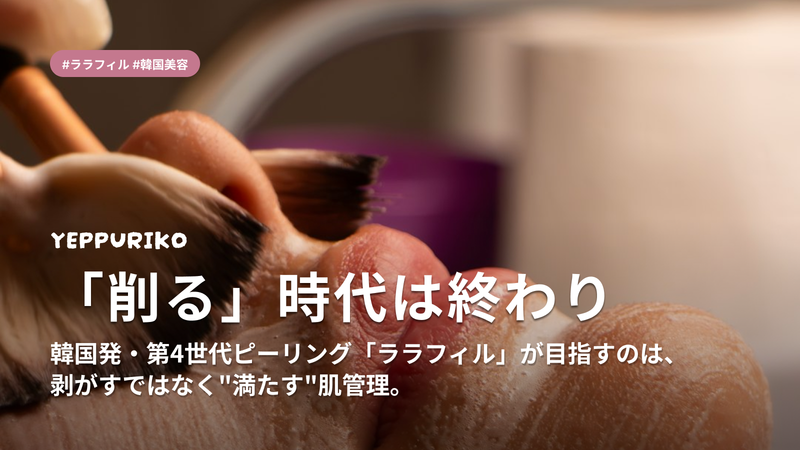
How Korea's peeling treatment, “LHALA FILL,” is changing the game
✨ A new approach to fourth-generation peeling

🎯 Do you have any “misconceptions” about peeling?
In Korea today, the definition of peeling as “scraping away the skin” is beginning to change.
Fourth-generation peeling treatment “LHALA FILL” employs an approach different from conventional exfoliating treatments, and its adoption is expanding in clinics in Korea and around the world.
When people hear “peeling,” many imagine something that “peels off the skin and causes redness.”
Some people may have wanted to try it but hesitated because of concerns about the length of downtime (recovery period) or its suitability for sensitive skin.
This is why LHALA FILL is called a “fourth-generation peeling treatment.”
🎯 What makes it different as a “fourth-generation” treatment?

The key ingredient in LHALA FILL is LHA (lipohydroxy acid).
LHA is a patented ingredient developed by L'Oréal, and its method of penetrating the skin is said to differ from that of conventional peeling agents.
Rather than removing the stratum corneum all at once, it acts gently while taking the skin's condition into account—this is described as one of its differences from conventional peeling treatments.
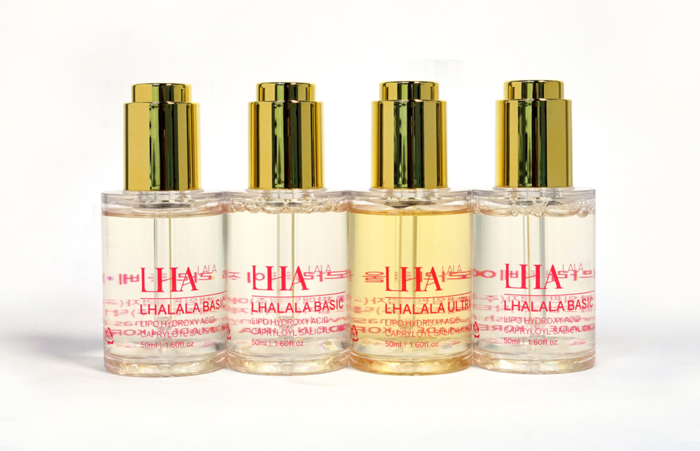
The formula combines four ingredients rather than using LHA alone, with each serving a different role.
✅ Four key ingredients in LHALA FILL
LHA (lipohydroxy acid): A patented ingredient by L'Oréal, known for its penetration properties.
H2Sol™ (alkaline ingredient): Positioned as supporting the improvement of the skin environment.
Lipids: Reported to support the condition of the skin barrier function.
INCUBE 504 (skin regeneration ingredient): Said to be expected to play a role in the skin regeneration process.
It is also designed to offer a choice between two solutions—Basic and Ultra—depending on the condition of the skin.
The ability to select the appropriate option according to each individual's skin condition, rather than applying the same treatment uniformly, can also be considered a modern approach.
🎯 What changes can be expected?

The following changes are said to be expected with LHALA FILL (results vary by individual, and a physician's assessment is required).
Approach to collagen and elastin production. It may promote the production of components associated with skin firmness and elasticity.
Supporting the condition of the skin barrier function. It is being considered as an approach to support the skin's natural defenses against external stimuli.
Approach to pore, dullness, and acne care. It may be possible to address multiple skin concerns together (depending on the condition).
Changes in elasticity and radiance. Some people report noticing a change in radiance after treatment (individual results vary).
Potential contribution to normalizing skin turnover. It is said to be expected to help regulate the skin's metabolic rhythm, and is introduced as an approach aimed at improving overall skin quality.
✅ Some people consult about LHALA FILL for reasons such as
People who have avoided conventional peeling because of sensitive skin, those who have struggled with pores or dullness for years, and those who want to shorten downtime may all consult for different reasons. Suitability varies depending on the skin's condition, so it is important to confirm with a physician during a consultation beforehand.
🎯 What the treatment's track record in more than 31 countries worldwide tells us

Although LHALA FILL originated in Korea, it is said to have been adopted by clinics in more than 31 countries worldwide.
As interest in Korean beauty and Korean cosmetics continues to grow, the treatment's global recognition may be one reference point to consider when exploring your options.
Its track record is only one indicator of reliability.
Suitability and results vary depending on each individual's skin condition, so when considering the treatment, it is advisable to make a decision after consulting a specialist.
🎯 What to confirm before considering the treatment
✅ What to confirm during your consultation
・Whether it is suitable for your current skin condition (sensitive, dry, acne-prone, etc.)
・Whether Basic or Ultra is better suited to your skin
・What to be careful about in your at-home care after treatment
・The expected downtime (confirm beforehand, as it varies by individual)
・How many treatments are anticipated (varies depending on the condition)
Although it is said to involve “relatively little downtime,” individual differences exist depending on the skin's condition and the treatment environment.
Confirming during a consultation beforehand whether it is suitable for your skin will help you make a choice you will not regret.
✨ Summary
Here are the key points to keep in mind before considering the fourth-generation peeling treatment “LHALA FILL.”
☑ Take a fresh look at the preconception that “peeling = peeling away the skin”
☑ Understand the roles of the four ingredients, including LHA, during your consultation
☑ Confirm the difference between Basic and Ultra with your physician
☑ Know that consultation may be possible even for sensitive skin (depending on its condition)
☑ Keep in mind that expected changes vary by individual and consider them in relation to your own goals
☑ Learn about your at-home care routine after treatment in advance
From “scraping” the skin to “nurturing” it. Start by speaking with a specialist to find out whether this approach is right for you.
📱 Next step
If you are interested in LHALA FILL or Korean beauty treatments, feel free to contact us through the LINE inquiry desk.
We deliver the latest information and practical advice on beauty treatments in Korea every week.📩
Related Columns
- Korean Makeup Experience: Typical Prices and How to Book Right
- The Perfect Myeongdong & Anguk Beauty 1-Day Course
- Do you believe the before-and-after photos from Korean clinics without question?
- A story about a Korean clinic visit where the budget tripled by the time I got back
- Logical Negotiation Techniques for Getting a Correction at a Korean Clinic
- Question Photos That Are “Too Beautiful”: 3 Ways to Spot Fake Reviews and Edited Photos in Korean Beauty Content