30 Korean Phrases Commonly Heard in Korean Dramas

Even without subtitles, you’ll find yourself thinking, “Oh, I know this word!” more and more💛
We’ll explain frequently used Korean phrases by scene to make Korean dramas even more enjoyable.
When watching Korean dramas, there are words you hear over and over again, right?
Don’t you feel a little happy when you realize, “Oh, I understand what they just said!” even without subtitles?✨
This time, we’ve compiled Korean expressions that are truly often used in dramas, organized by scene.
Just learning these will make it easier to grasp the nuances of the dialogue and should make dramas even more enjoyable.
-

🎬 Why is learning Korean through Korean dramas recommended?
Korean dramas are the best learning materials for studying real-life Korean.
They are packed with realistic everyday conversations and emotional expressions that textbooks don’t teach you.
The fact that the same phrases appear repeatedly also makes them naturally easy to remember.
In particular, romance dramas and slice-of-life dramas are treasure troves of expressions you can use right away.
There will surely be more moments when you think, “I want to try using the words from this scene, too!”
As you become more aware of what was said before even following the subtitles, the characters’ feelings will come across much more directly💕
💕 Classic Phrases in Romance Scenes|Words You Always Hear in Heart-Fluttering Moments
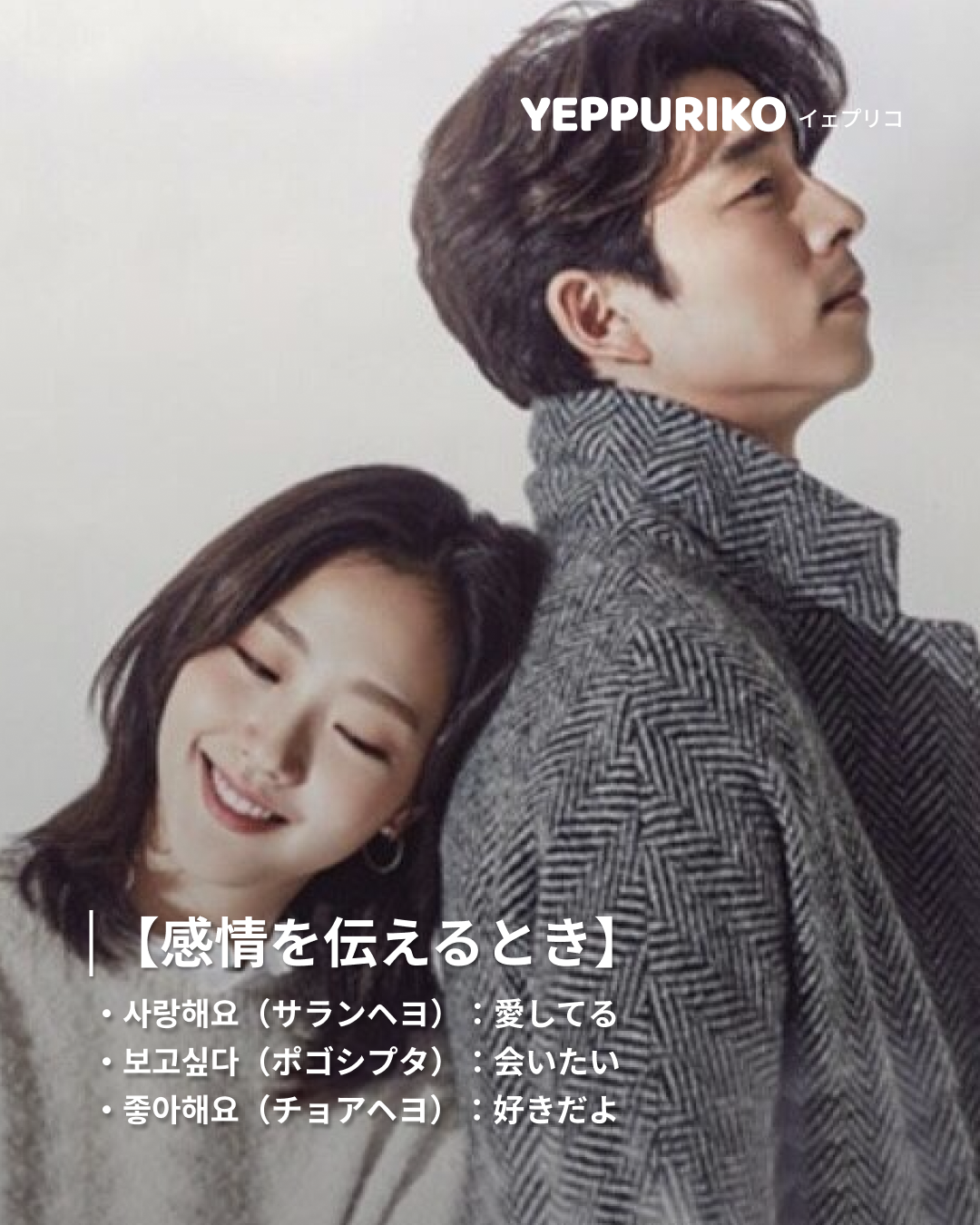
These are the heart-fluttering expressions that always appear in romance scenes in Korean dramas.
You hear them repeatedly in every drama, so once you remember them, you’ll immediately know, “Oh, this is a confession scene!”
사랑해요(サランヘヨ):I love you
It would not be an exaggeration to call this the most famous phrase in Korean dramas.
Sometimes it is said casually as 「사랑해(サランヘ)」, while at other times the more polite 「사랑합니다(サランハムニダ)」 is used.
The form is chosen depending on the relationship with the other person.
보고싶다(ポゴシプタ):I miss you
This is a phrase you often hear in long-distance relationship scenes or scenes where the characters keep missing each other.
There is also the polite form, 「보고싶어요(ポゴシポヨ)」.
When this phrase appears, you can’t help but feel, “Ah, this is such a bittersweet scene…”🥺
좋아해(ジョアヘ):I like you
A classic confession scene.
It is often said casually as 「좋아해(ジョアヘ)」, but in a first confession scene, there are also moments when it is conveyed nervously as
「좋아합니다(ジョアハムニダ)」.
When this phrase appears, it is a sign that the drama’s story is about to take a major turn!
너무 예뻐(ノム イェッポ):So beautiful/pretty
A heart-fluttering phrase the male lead says while gazing at the heroine.
「너무(ノム)」 means “very,” while 「예뻐(イェッポ)」 means “beautiful” or “pretty.”
It is frequently used as a compliment✨
🗣️ Frequently used phrases in everyday conversation|Phrases that let you carry on a conversation just by memorizing them
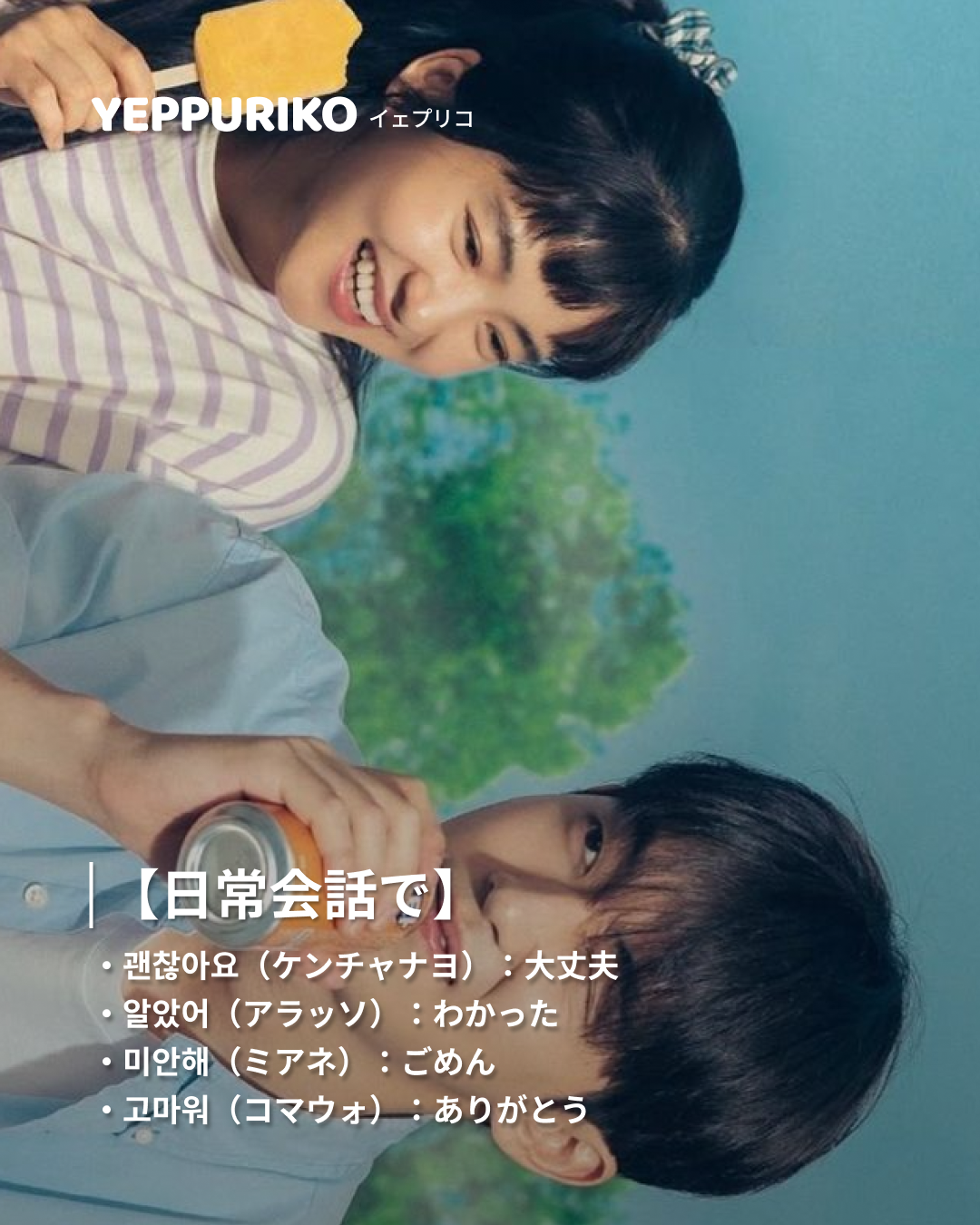
These are basic phrases that appear throughout dramas in all kinds of everyday scenes.
If you memorize these, you can use them right away when traveling in Korea!
괜찮아요(ケンチャナヨ):I’m okay/It’s okay
A phrase used in response when someone expresses concern or apologizes.
It is also often said informally as 「괜찮아(ケンチャナ)」.
It appears so frequently in Korean dramas that you hear it several times in a single episode😊
알았어(アラッソ):I understand
An expression of acknowledgment used when you understand what the other person is saying.
When saying it politely, use “알았어요(アラッソヨ)”.
It is an essential phrase for maintaining the rhythm of a conversation.
미안해(ミアネ):Sorry
A basic phrase for apologizing.
To say it more politely, use “미안해요(ミアネヨ)” or “죄송합니다(チェソンハムニダ)”.
You hear it many times in scenes involving misunderstandings in dramas, right?💦
고마워(コマウォ):Thank you
The most basic phrase for expressing gratitude.
To say it politely, use “고마워요(コマウォヨ)” or “감사합니다(カムサハムニダ)”.
It is one of the expressions used most frequently in everyday situations.
잠깐만(チャムカンマン):Wait a moment
Used when stopping someone to get their attention.
It can also be said politely as “잠깐만요(チャムカンマンニョ)”.
In dramas, this phrase often appears just before someone reveals something important!
😲 Phrases for when emotions run high|Expressing surprise, joy, and excitement
These are emotionally expressive phrases often heard in exciting drama scenes.
대박(テバク):Amazing! Incredible!
A slang term used by young people to express surprise or excitement.
It can be used in both positive and negative contexts.
The form 「대박이다(テバギダ)」 is also frequently used✨
진짜(チンチャ):Really? True
Used when you are surprised or want to emphasize something.
It is also often used in question form as 「진짜요?(チンチャヨ?)」.
One of the most frequently used words in Korean dramas!
그래(クレ):Yeah・Right
A basic phrase used as a response to show you are listening.
It can also be said politely as 「그래요(クレヨ)」.
It is essential for keeping the flow of a conversation smooth.
정말(チョンマル):Really
It has a similar meaning to 「진짜(チンチャ)」, but gives a slightly more formal impression.
It is also used to express surprise as 「정말요?(チョンマルリョ?)」.
An essential phrase when you want to emphasize your emotions💛
어떡해(オットケ):What should I do?
An expression used when you’re troubled or panicking.
You’ll also often hear it in the form 「어떡하지 (Eotteokhaji)」.
It always comes up when the heroine is in a pinch, right?😱
💔 Phrases Often Heard in Farewell Scenes|Those Heartbreaking Words
In the iconic scenes of Korean dramas, there are always farewell words that stay with you.
가지마 (Kajima): Don’t go
A heartbreaking phrase you’re sure to hear in farewell scenes.
When this phrase comes up, you know, “This is the climax…!” right?🥺
It can also be said more politely as 「가지 마요 (Gaji mayo)」.
헤어지자 (Heeojija): Let’s break up
Used at important turning points in romantic dramas.
There is also the polite form 「헤어져요 (Heeojyeoyo)」.
The moment this phrase comes up, viewers’ tear ducts completely give out💦
미워 (Miwo): I hate you
A phrase that comes up in emotionally charged scenes.
It can also be said as 「미워요 (Miwoyo)」.
It’s often used in scenes where someone says it out of hurt, even though they don’t really hate the other person…
🌟 Other Useful Phrases|Expressions That Are Handy to Remember
These are useful expressions that can be used in various drama scenes.
어서 오세요(オソ オセヨ):Welcome
A phrase you will always hear in store scenes.
It is also used when welcoming someone into your home.
It is a phrase you will often hear when traveling in Korea too🏠
맛있어요(マシッソヨ):Delicious
A classic phrase used in eating scenes.
You can also say 「맛있다(マシッタ)」 in casual speech.
It appears many times in food dramas🍽️
잘 먹겠습니다(チャル モッケッスムニダ):Let's eat
A greeting said before starting a meal.
It is also an important expression for understanding Korean culture.
You always hear it in family meal scenes, right?
안녕히 가세요(アンニョンヒ カセヨ):Goodbye (to the person leaving)
A parting greeting.
The person staying says 「안녕히 계세요(アンニョンヒ ケセヨ)」.
It is one of the interesting points of the Korean language👋
좋아 죽겠어(チョア チュッケッソ):I love you so much I could die
A slightly exaggerated expression of love.
It’s a passionate phrase unique to Korean dramas.
It’s used in romantic scenes💕
📚 Tips for Learning Korean Through Dramas|Effective Study Methods
Here are some tips for learning Korean effectively while watching Korean dramas.
1. First, understand the story with subtitles
Start by enjoying the story with Japanese subtitles while taking notes on phrases that catch your attention.
It’s important to understand what kinds of scenes the phrases are used in.
2. Watch the same drama repeatedly
Focus on understanding the story the first time, and on Korean from the second viewing onward.
By listening repeatedly, the phrases will naturally stay in your mind.
It’s especially recommended to rewatch your favorite scenes several times✨
3. Try saying the lines aloud
Imitate the actors’ pronunciation and try saying the lines aloud yourself.
You can learn the intonation and speaking speed at the same time.
The key is to say them with emotion without feeling embarrassed!
4. Replay your favorite scenes
Watch especially memorable scenes over and over again.
Along with the lines, you can also remember the emotions and facial expressions from that moment.
They’ll be easier to remember💛
5. Try using them in everyday life
Try actually using the phrases you’ve learned, even if you’re just talking to yourself.
By using them, they’ll gradually become your own.
It’ll be even more fun if you can actually use them during a trip to Korea🎵
🎯 Recommended Dramas by Level|The Best Shows for Learning Korean
For Beginners: Dramas with Lots of Everyday Conversation
『Guardian: The Lonely and Great God』 and 『My Love from the Star』 are easy to learn from because they feature plenty of everyday conversation.
They also have strong romantic elements, with lots of phrases expressing emotions.
For Intermediate Learners: Dramas with a Variety of Expressions
『Itaewon Class』 and 『Crash Landing on You』 feature a wide range of situations.
You can learn a broad range of expressions, from business conversations to everyday conversations.
For Advanced Learners: Dramas with Specialized Terminology
Medical drama 『Hospital Playlist』 and courtroom drama 『Extraordinary Attorney Woo』.
They include specialized terminology, but are recommended for those who want to improve their Korean expressive ability📺
✨ Summary|Have Fun Learning Korean with Dramas
Korean dramas are the perfect tool for learning Korean while having fun.
It’s perfectly fine to start by watching with subtitles.
As your ears gradually get used to the language, the process of having more and more moments of “Oh, I know this word!” is truly enjoyable.
The phrases introduced this time are all basic expressions that are sure to appear in any drama.
Start with the phrases that interest you and try memorizing them one by one📝
The next time you watch a drama, be sure to listen carefully🎧
The joy of watching Korean dramas is sure to multiply several times over.
Be sure to experience the joy of understanding more and more without subtitles💛
We’ve brought you reliable and trustworthy Korean information to make Korea feel closer, from Yeppuriko.
Related Columns
- 4 medications for fever at midnight available at Korean convenience stores
- 6 Negative Expressions in Korean|Real Emotional Phrases Learned from Dramas
- How to Choose a K-Drama So You’ll Never Again Wonder, “What Should I Watch Next?”
- 밥먹었어 Meaning: Why “Did You Eat?” Is a Korean Greeting
- The Korean remake film “Tonight, from the World” is trending on Netflix.
- A Complete Guide to Using “좋아요 (Joayo),” a Phrase You Always Hear in Korean Dramas