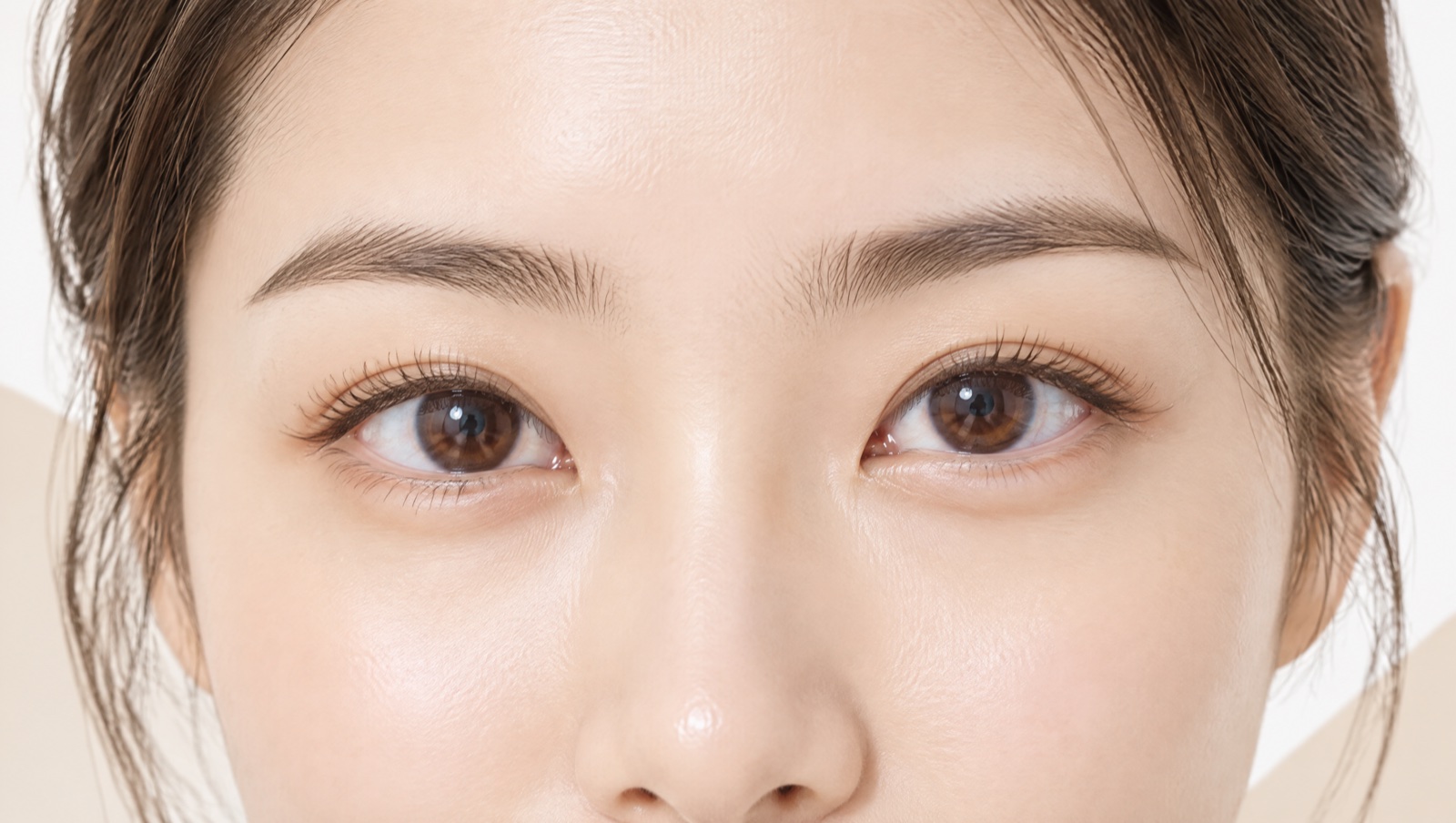
Instead of removing under-eye fat, this surgery moves it into hollow areas, smoothing out under-eye puffiness, deep tear troughs, and the shadowy dark circles they create, all at once. It uses an internal incision through the conjunctiva on the inner side of the lower eyelid, so no incision is made on the skin's surface. Surgery time is about 30 minutes.
Who it's for
- Puffy under-eyes that look wrinkled and saggy
- Sunken under-eyes that make you look older, or deep tear troughs
- Dark under-eyes that make you look tired or unwell
- Dark circles that creams and massages haven't changed
- Puffiness that has come back, or a hollow look, after under-eye fat removal
How it's done
- 1:1 diagnosisThe areas that need work, such as puffy under-eyes or deep tear troughs, are carefully assessed. Since the cause can vary (protruding fat, tear troughs, sagging skin, or vascular dark circles), each symptom is checked separately.
- AnesthesiaEye surgery is performed under sedation or local anesthesia. A board-certified anesthesiologist handles your anesthesia one-on-one, with real-time monitoring from the start of surgery through recovery.
- Conjunctival incisionThe incision is made through the conjunctiva on the inner side of the eyelid rather than on the outer skin, with the goal of leaving no visible scar.
- Fat repositioningFat from the under-eye fat pads is moved into the hollow, sunken areas. If there's a lot of fat, a small amount is removed before repositioning.
- ContouringThe procedure is finished with the aim of a flat, smooth under-eye line.
What's included
- 1 under-eye fat repositioning surgery
Price includes VAT and applies during the clinic's event period. Add-on procedures such as aegyo-sal (the small fullness just under the lash line) fat grafting, cheek fat grafting, dark-circle vessel treatment, or lifting, as well as anything not listed as included in the event, are charged separately and will be explained during your consultation.
From surgery day to recovery
- Surgery dayAfter consultation and diagnosis, surgery is performed under sedation or local anesthesia. Surgery time is about 30 minutes.
- 1–2 weeks afterRecovery takes about 1–2 weeks. Major swelling and bruising gradually subside, and light daily activities may be possible relatively quickly.
- 1 month afterThe under-eye line is settling in. The clinic publishes progress photos from before surgery, 2 weeks, 1 month, and 3 months.
- 3 months and beyondIt can take anywhere from several weeks to several months for the under-eye line to settle naturally. If you had fat grafting or other surgery at the same time, your recovery may look different.
Aftercare
- While you're under anesthesia, a real-time monitoring system tracks your condition from the start of surgery through recovery.
- The clinic checks your progress after surgery and provides aftercare to help prevent issues like inflammation.
- If any touch-up treatment is needed while the under-eye line settles, it's discussed based on your progress.
Doctors and clinic
Anesthesia for under-eye surgery is handled one-on-one by a board-certified anesthesiologist on site. The specialist you consult with before surgery performs the surgery personally, and the clinic uses private single-patient operating rooms equipped with CCTV. Emergency equipment such as defibrillators is also on hand. The clinic is in Seocho-gu, within walking distance of Gangnam Station Exit 10 and Sinnonhyeon Station Exit 7. If you need an interpreter, ask about available languages when booking.
Side effects and precautions
- Bleeding, infection, or inflammation can occur after surgery, so follow the clinic's aftercare instructions.
- Swelling and bruising are common and subside over 1–2 weeks.
- Vascular dark circles, which look dark because of prominent blood vessels, may need congested-vein treatment or additional procedures, and pigmented dark circles may need separate care.
- If your under-eye fat sits close to your aegyo-sal, moving the fat may make the aegyo-sal look smaller after surgery. If you want to keep it, let the clinic know during your consultation.
- If the hollowness is actually caused by volume loss, a complementary treatment such as fat grafting may also be needed.
- If skin sagging is severe, another approach such as lower blepharoplasty may be a better fit.
- Age-related skin sagging and tissue changes can progress again over time.
FAQ
What's the difference between under-eye fat removal and repositioning?
Removal reduces protruding fat, so if too much is taken out, the under-eyes can look hollow, and surrounding fat can push forward again, bringing the puffiness back. Repositioning moves your existing fat to where it's needed, aiming to ease both puffiness and hollowness together.
Will it help my dark circles too?
Dark circles caused by protruding fat or tear-trough shadows can be improved with repositioning. Vascular dark circles may need vein treatment or additional procedures, and pigmented ones may need separate care.
Can I get it if my under-eyes are already hollow?
Yes. The fat isn't removed but moved into the hollow areas to soften the line, and if volume loss is significant, fat grafting is planned alongside it.
Can I combine it with fat grafting or aegyo-sal surgery?
Yes, depending on your under-eye condition and the look you want. Fat can be grafted into the aegyo-sal or the front of the cheeks, and lifting can be planned for sagging lower cheeks. Rather than piling on procedures, the priority is a plan tailored to the cause of your under-eye concerns and your overall facial balance.
Will it leave a scar?
Because it's an internal incision through the conjunctiva on the inner side of the eyelid, no incision is made on the skin's surface, so visible scarring is minimal.