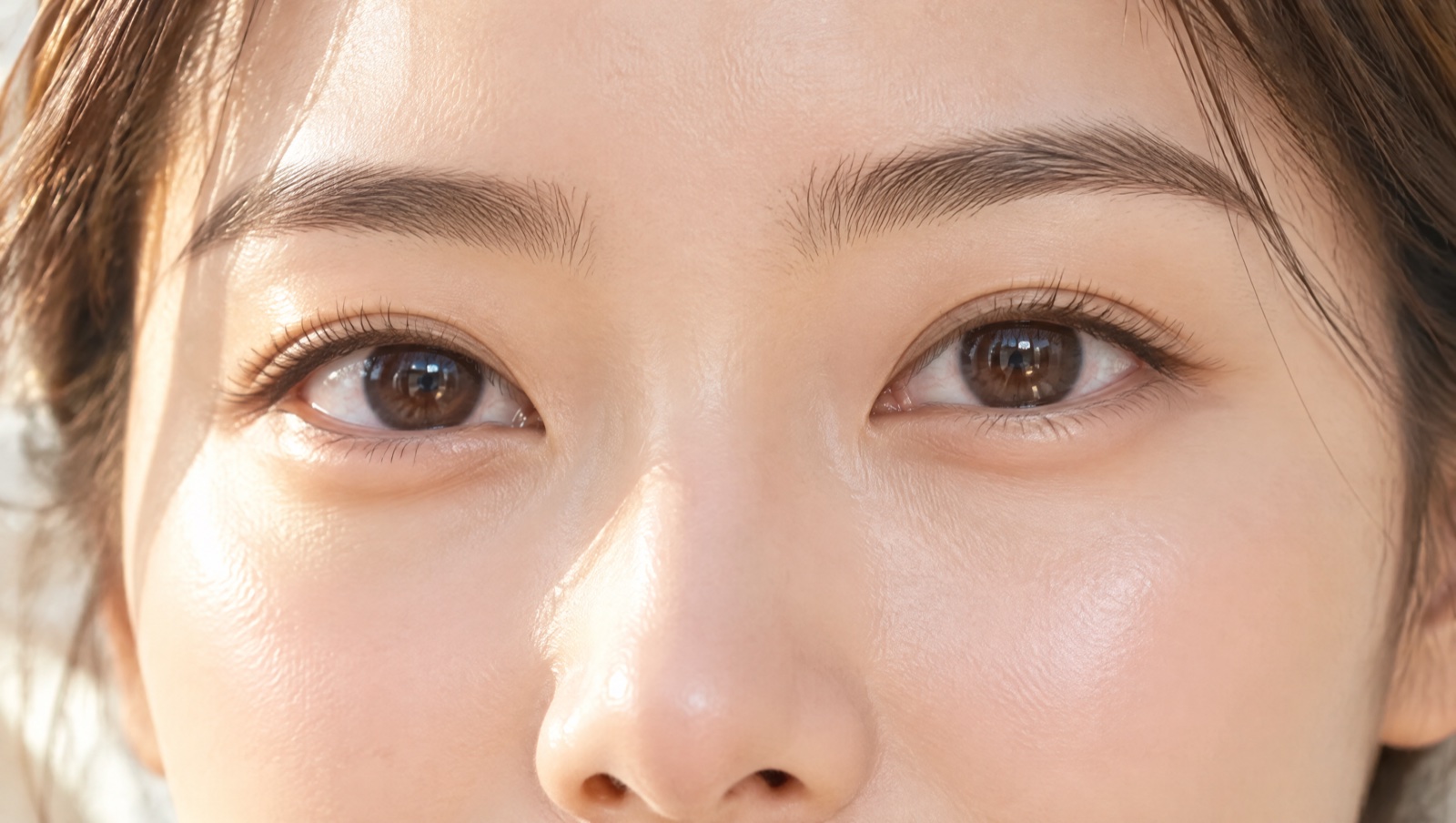
This lower eyelid fat repositioning event is for anyone bothered by under-eyes that look puffy or hollow and make you appear tired and dull. The surgery moves bulging under-eye fat evenly into the hollow areas to create a smooth under-eye contour. Because it is performed through the conjunctiva on the inside of the eyelid, no incision marks are left on the outside.
Who it's for
- People whose under-eyes look both puffy and hollow
- People bothered by a tired look and dark circles that seem severe
- People who look older than their age because of under-eye bags
- People whose under-eye contour looks bumpy when they smile
- People whose skin still has a reasonable amount of elasticity
How it's done
- Diagnosis and choice of methodIf there is enough under-eye fat, repositioning is the right fit. If fat is lacking or there is only hollowness, micro fat grafting, which fills the hollow areas with fat, is more suitable. The method is decided by analyzing the condition of the skin, fat and muscle. If skin sagging is severe, fat repositioning alone may not be enough, and a more extensive surgery such as a lower blepharoplasty may be needed.
- Conjunctival incisionAccess is made through an incision in the conjunctiva on the inside of the lower eyelid. This approach leaves no visible scar on the outside.
- Fat repositioningThe bulging fat is spread downward and repositioned evenly into the hollow areas. The orbicularis oculi muscle that forms the aegyo-sal (the small fullness right under the lash line) is preserved, and only the necessary fat is selectively adjusted.
- Orbital septum reinforcementThe orbital septum that holds the fat is restored and secured to reduce the chance of the under-eyes becoming puffy again.
The surgery takes about an hour and is performed under sedation. No hospital stay is required, and there are no stitches to remove.
What's included
- One lower eyelid fat repositioning surgery
The price includes VAT and applies during the clinic's event period. Costs for combining other surgeries, such as micro fat grafting or a lower blepharoplasty, are not included and will be explained during your consultation.
From surgery day to recovery
- Before surgeryYour under-eye condition and skin sagging are assessed to decide on the surgical method. Gently pulling your under-eye skin in front of a mirror beforehand to see how much excess skin there is can help with the consultation.
- Surgery dayThe surgery takes about an hour under sedation, and you go home without a hospital stay.
- Right after surgery to day 7The recovery period is given as about 7 days. With no visible external incision, getting back to daily life tends to be quick.
- 1–2 monthsAllow a month or two for the swelling to fully go down and for the under-eyes to settle.
Aftercare
- The clinic runs a program for swelling management, infection prevention and incision-site care.
- Follow-up schedules and post-op precautions will be explained during your consultation.
Doctor and clinic
Lead surgeon Dr. Lee Hee-young, a board-certified plastic surgeon, personally handles both consultation and surgery. He is a member of the Korean Society of Plastic and Reconstructive Surgeons, the Korean Society for Aesthetic Plastic Surgery and the Korean Society of Oculoplastic Research. Surgeries are performed under a named-surgeon policy, with no ghost surgery. Consultations are available in Japanese; for other languages, please ask when booking. The clinic is about 300m from Exit 3 of Apgujeong Station.
Side effects and precautions
- Swelling and bruising may occur after surgery. Right after surgery the swelling may make you worry about the result, but things settle over a month or two.
- Dark circles are caused by pigmentation, so this surgery does not directly remove them. They may look softer, however, as the shadows and unevenness created by bulging fat are reduced.
- Although it is done from inside the eyelid, it is a demanding surgery that involves locating and securing fat within the limited field of view around the eye, so bleeding, infection or inflammation may occur afterward.
- If the front of the cheeks looks hollow once the under-eyes are flattened, fat grafting is sometimes done at the same time. In that case, the cost is quoted separately.
FAQ
Will I lose my aegyo-sal?
The surgery neither removes nor creates aegyo-sal. The explanation is that once the under-eye fat bulge is gone, the aegyo-sal you already had becomes visible. You can check this in advance by looking at your under-eyes when you smile.
Will there be a scar?
Since access is through the conjunctiva on the inside of the lower eyelid, no visible incision marks are left on the outside.
How is lower eyelid fat repositioning different from a lower blepharoplasty?
If under-eye skin sagging is significant, fat repositioning alone may not be enough, and a lower blepharoplasty, which also addresses the skin, may be needed. This is decided after an examination.
What languages are consultations available in?
Consultations are available in Japanese. For other languages, please ask in advance when booking.