The Correct Seoul Taxi Fares and Late-Night Surcharges
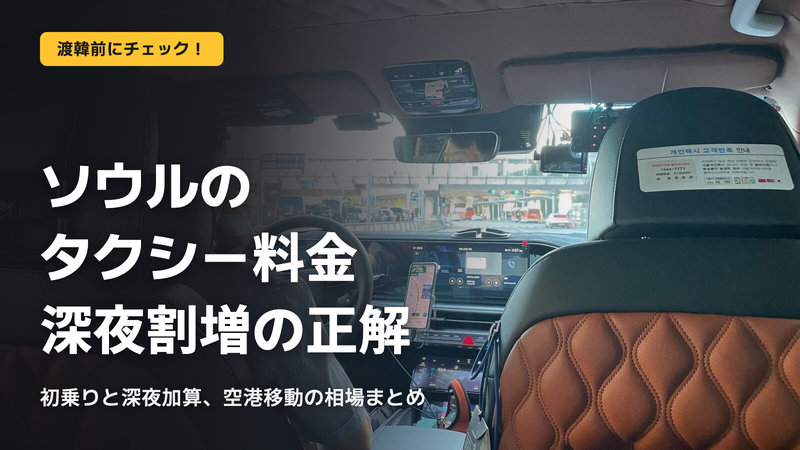
These are the figures to use as a guide for taxi fares in Seoul. A standard taxi costs 4,800 won for the first 1.6 km, then adds 100 won for every additional 131 m or 30 seconds. When traffic is heavy and the taxi cannot maintain speed, the time-based fare takes priority; when traffic flows smoothly, the distance-based fare is the main factor.
At night, however, things change. A surcharge begins after 10 p.m., and during the peak late-night period from 11 p.m. to 2 a.m., fares increase by 40%. Even when traveling the same distance in the same car, the amount you pay can change simply because the clock is off by one hour.
We’ll look at the fares by taxi type, time-based surcharges, typical fares from the airport, and one point that often causes problems when registering for Kakao T(카카오T), in that order 🚕
Conclusion first/A standard taxi costs 4,800 won, while deluxe and large taxis cost 7,000 won for up to 3 km. Late-night surcharges for standard taxis are applied in stages, up to 40%, while deluxe and large taxis have a flat 20% surcharge from 10 p.m. to 4 a.m. From Incheon International Airport(인천공항)to Myeongdong(명동), a typical fare is 60,000–70,000 won including the expressway toll.
First, get familiar with this fare table
Taxi fares in Korea are determined by the base fare plus meter-based charges. Comparing the basic fares for the four types of taxis operating in Seoul makes it easier to understand how to choose one.
| Type | Base fare | Applicable distance | Additional charge | Late-night surcharge | Vehicle features |
|---|---|---|---|---|---|
| Standard taxi (midsize) | 4,800 won | Up to 1.6 km | 100 won every 131 m or 30 seconds | Up to 40% | Orange, white, or silver; yellow license plate |
| Deluxe taxi(모범택시) | 7,000 won | Up to 3 km | 200 won every 151 m or 36 seconds | 20% | Black body with a gold stripe |
| Large taxi | 7,000 won | Up to 3 km | 200 won every 151 m or 36 seconds | 20% | Black van; seats 7–10 passengers |
| International taxi | Flat rate | Varies by area | — | 20% | Marked “International TAXI” |
Deluxe taxis are luxury vehicles driven by veterans with at least five years of accident-free experience for company drivers or 10 years for owner-operators. Many drivers can communicate in Japanese or English, making them suitable for those who value courteous service even at a higher fare. Large taxis use the same fare structure as deluxe taxis, and advance booking is generally required. They are ideal for groups traveling with a lot of luggage.
International taxis are a reservation-based service officially operated by the Seoul Metropolitan Government, and applications generally need to be made at least 24 hours in advance. Their fares are set slightly higher than those of standard taxis. If toll roads are used, the passenger is responsible for the toll, and the toll between Incheon International Airport and Seoul is an additional 7,900 won. Since fares may be revised, it is a good idea to check the latest information on the official Korea Tourism Organization website before traveling to Korea.
The key difference is the “clock.” Late-night surcharges are tiered
This is where the biggest miscalculations occur with Seoul taxis. The late-night surcharge for regular taxis is not uniform—it is divided into three tiers depending on the time of day🌙
| Time | Regular taxi | Deluxe・large taxi |
|---|---|---|
| 22:00–23:00 | 20% surcharge | 20% surcharge |
| 23:00–2:00 the following day | 40% surcharge | 20% surcharge |
| 2:00–4:00 | 20% surcharge | 20% surcharge |
In other words, only from 11 p.m. to 2 a.m. is the price gap with deluxe taxis narrower. This is also when it becomes difficult to catch a regular taxi from restaurant and nightlife districts, making deluxe taxis a realistic option. Conversely, at 10 p.m. or after 2 a.m., both regular and deluxe taxis charge the same 20% surcharge.
Going outside the city? Add another 20%
When taking a taxi licensed to operate within Seoul to nearby areas such as Gyeonggi-do, an additional 20% is added to the regular fare. In addition, Seoul taxis are not permitted to pick up passengers outside the city, so drivers may refuse rides because they do not want to return with an empty vehicle. If you are traveling a long distance, the safest option is to arrange a ride in advance through a ride-hailing app or via your hotel.

How much should you expect to pay for a taxi from the airport?
Airport transfers involve considerable distances, so having a rough idea of the going rate in advance is useful. The estimates in the original text are as follows.
- Incheon Airport → Myeongdong: Approximately 60–90 minutes, 55,000–60,000 won. Including highway tolls, the total is approximately 60,000–70,000 won. It may approach 80,000 won at night or during heavy traffic
- Incheon Airport → Gangnam: Approximately 65,000–70,000 won
- Gimpo Airport → Myeongdong: 30–40 minutes, approximately 20,000–25,000 won
Since the route from Incheon Airport uses the expressway, a 7,900-won toll is added to the fare shown on the meter. If the fare seems higher than the meter amount when you get out, the difference is usually this toll. Knowing this in advance can prevent problems.
Editor's note: The most common issue with airport taxis is not overcharging but miscommunication about the destination. It is quite common for drivers to speak only Korean, so the quickest approach is to show your destination on an app screen or on a note written in Hangul. Keep in mind that it can also be difficult to find an available taxi for late-night or early-morning flights.
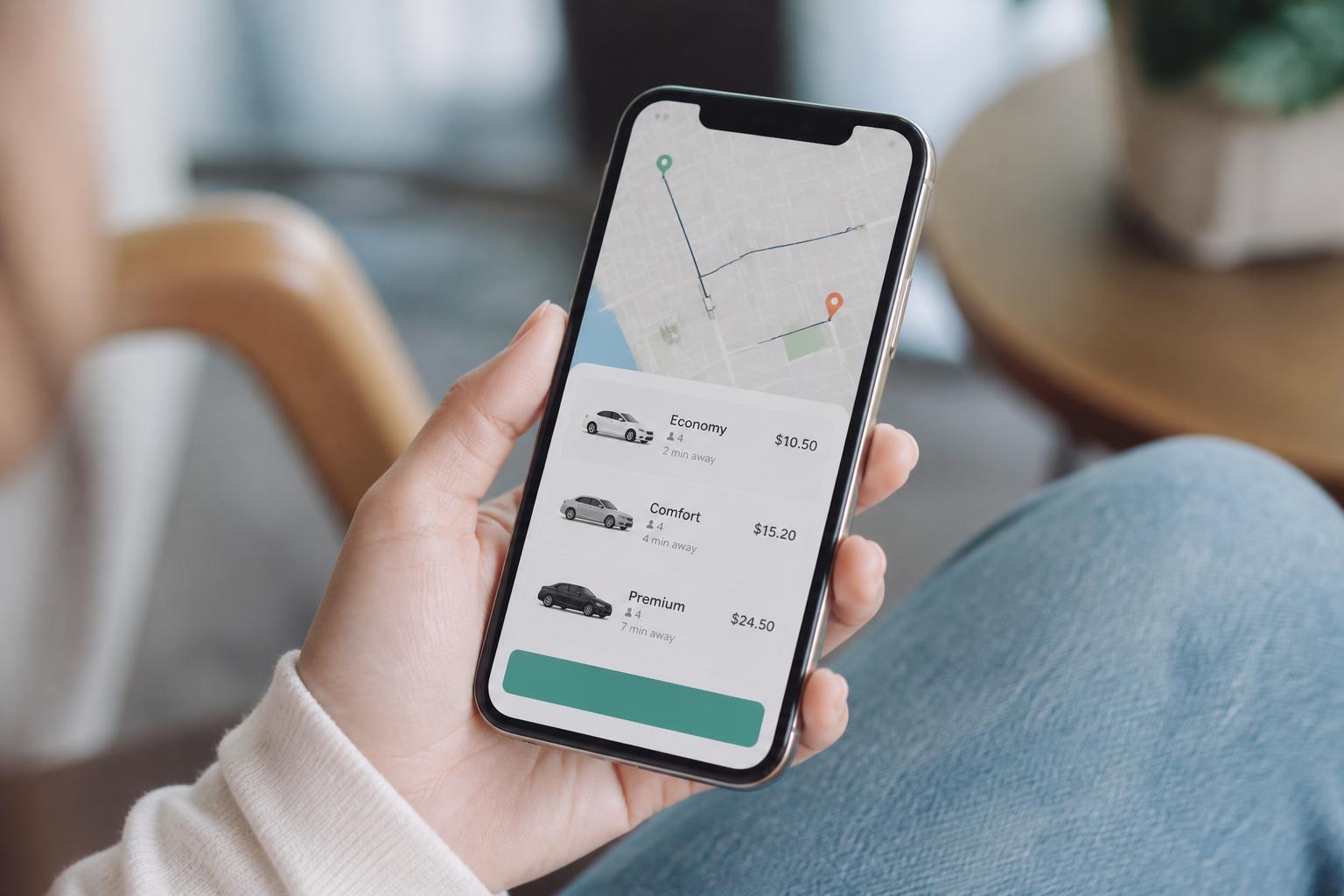
There are 3 ways to hail a taxi. The most reliable is an app
There are three ways to catch a taxi in Seoul: hailing one on the street, using a taxi stand, or using a ride-hailing app.
Street-hailed taxis stop when you raise your hand on the road, just like in Japan. If the red sign “빈차 (empty)” is lit on the windshield, it means the taxi is available. The roof sign displays “TAXI” or “서울 (Seoul).” The doors are manually opened and closed by passengers. However, now that ride-hailing apps are widely used, there are times when it is difficult to find an available street-hailed taxi in busy downtown areas.
Taxi stands are available at airports, major stations, and in front of hotels, and you can board in order after waiting in line. Very occasionally, you may encounter a driver who refuses short-distance trips or, conversely, long-distance trips. In that case, it is faster not to argue and simply look for the next taxi.
Register for Kakao T before you leave
The most reliable option is the ride-hailing app “Kakao T (카카오T).” Enter your current location and destination, and a nearby available taxi will be dispatched. You can also check the estimated arrival time and approximate fare in advance. Once the ride is confirmed, the vehicle number and driver information are displayed, helping you avoid getting into the wrong taxi. The biggest advantage is that you can select your destination on the screen, so you will hardly need to speak Korean.
The app can be downloaded for free from the Japanese app stores (iOS/Android). Phone number verification during registration generally works by selecting the country code “+81” and completing SMS verification with your Japanese mobile number—but there are cases where verification cannot be completed with a Japanese number. In that case, you will need an alternative method, such as buying a SIM card locally and obtaining a Korean phone number. That is why it is best to try completing the initial registration at home before departure, rather than on the day you travel to Korea. The last thing you want is to get stuck after arriving at the airport.
Avoid “call vans”
Taxis in Korea generally use meters, so there is no need to negotiate the fare. In other words, a vehicle that does not use a meter is not a legitimate taxi.
The black vans that call out to you on the street asking, “Would you like a ride?” are unofficial taxis known as “call vans (콜밴).” They can be confusing because they look similar to deluxe taxis and large taxis, but it is best to avoid using them because they may not use a meter and could charge excessively high fares. Legitimate large taxis are taken through an advance ride-hailing reservation and do not solicit passengers on the street. Once you remember this, they are not difficult to distinguish.
Summary
In Seoul, regular taxis have a base fare of 4,800 won (up to 1.6 km), while deluxe and large taxis start at 7,000 won (up to 3 km). This difference narrows late at night, with only regular taxis subject to a 40% surcharge from 11 p.m. to 2 a.m. From the airport, the estimated fare is 60,000–70,000 won including the highway toll from Incheon to Myeongdong, and 20,000–25,000 won from Gimpo to Myeongdong.
There are only two things to prepare. Install Kakao T and complete verification before traveling to Korea, and do not get into black vans that call out to you on the street. If you keep these two points in mind, you will hardly need to worry about fares or language.
Frequently asked questions
How much more expensive are Seoul taxis late at night?
Regular taxis use a tiered fare system: fares increase by 20% from 10–11 p.m. and 2–4 a.m., while the peak period from 11 p.m. to 2 a.m. has a 40% surcharge. Deluxe and large taxis have a flat 20% surcharge from 10 p.m. to 4 a.m. From 11 p.m. onward, the price difference from regular taxis narrows, making it a time when choosing a deluxe taxi can be worthwhile.
Can I register for Kakao T with a Japanese phone number?
Basically, yes. Select the country code “+81” and complete SMS verification using your Japanese mobile number. However, verification may not be completed in some cases, in which case you will need to purchase a SIM card locally and obtain a Korean phone number. To be safe, install the app and complete the initial registration before traveling to Korea.
How much does a taxi from Incheon Airport to Myeongdong cost?
The journey takes approximately 60–90 minutes. The metered fare is 55,000–60,000 won, and the total, including the 7,900-won expressway toll, is approximately 60,000–70,000 won. At night or during traffic congestion, it may cost close to 80,000 won. To the Gangnam area, expect to pay around 65,000–70,000 won.
Related Columns
- Korea Starbucks LEAF TO COFFEE: 6 items, 2 mugs not in stores
- Busan PASS: The Difference Between BIG3 and BIG5
- 8 HYBE sacred spots and how to get around Seoul
- When it comes to taking Korean ramyeon home, the deciding factor is the toppings
- The 3 Korean transit cards — which one is actually the right choice?
- Seoul FW: The Right Way to Enjoy 7 Days for Free