Onda Lift Complete Guide | A Revolutionary Lift Achieved with Zero Pain
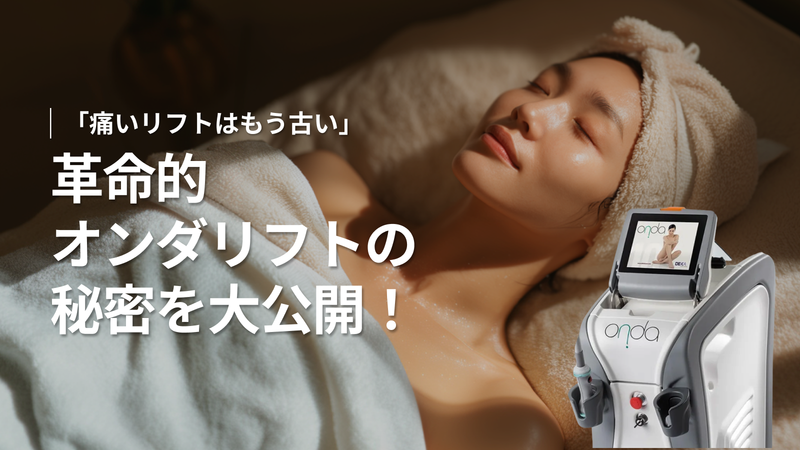
🌊 What is ONDA Lift (ONDA) “for people who are worried about pain”? Features and precautions explained
Among the lifting treatments gaining popularity in Korea, one name that has been heard more frequently in recent years is “ONDA (ONDA/ONDA Lift).”
More and more people are considering it because of needs such as “I am not good with pain,” “I want to avoid downtime as much as possible,” and “I want a naturally firmer appearance.”
However, aesthetic medical treatments are an area where suitability and individual differences vary greatly.
Here, we will organize information about ONDA’s mechanism, expected changes, and points to confirm before receiving treatment.
1)What is ONDA (ONDA)?
ONDA is known as a medical device (treatment) designed to use microwaves (2.45GHz) to deliver thermal energy to the subcutaneous tissue.
The device is designed to control the temperature of the skin’s surface, and is characterized by the concept of “delivering heat to deeper layers while protecting the surface.”
※How the treatment feels (sensation of heat and degree of pain) and its suitability vary depending on skin type, treatment area, and your condition on the day.
2)Expected changes (timeline)
ONDA is often described as a treatment that provides a gradual tightening effect rather than producing a dramatic change in a single session.
-
・ Immediately after treatment〜several days: Some people may “feel” a tightening sensation (individual differences)
-
・ 1〜4 weeks: A period when firmness and contour changes are likely to gradually appear
-
・ 1〜3 months: Depending on your condition, this is often when changes are easiest to notice
※The above is a summary of general information and does not guarantee results.
3) Commonly Mentioned Points of Facial Treatments (By Area)
Depending on the clinic, treatment plans may be proposed with different output levels and application designs for specific facial areas.
-
・ Around the eyes and mouth: Often explained as aiming for delicate tightening
-
・ Cheeks and jawline: Often explained as aiming to tighten sagging and define the contours
-
・ Double chin and under the chin: May be proposed as an approach targeting the fat layer
However, for those with a small amount of fat / thin skin, another treatment may be more suitable, so an accurate diagnosis is important.
4) Downtime and Post-Treatment Precautions (General Guidelines)
Although the downtime is often said to be short, the skin may become more sensitive after treatment, so keep the following basic points in mind.
-
・ Day of treatment to several days afterward: Take care with moisturizing and UV protection
-
・ On the day of treatment: Avoid prolonged sauna sessions, extremely hot baths, and vigorous massages
-
・ If redness or a feeling of heat occurs: Do not push yourself, and check with the clinic
5) What to Check When Choosing a Clinic
Satisfaction with aesthetic medical treatments depends greatly not on the device name, but on the thoroughness of the diagnosis, treatment planning, and explanations.
-
・ Which areas will be treated, and for what purpose? (The basis for the diagnosis)
-
・ Whether risks such as redness, a feeling of heat, and temporary swelling are explained
-
・ Whether recommendations regarding the number and intervals of treatments are “not being excessively pushed”
-
・ The post-treatment contact system (whether the guidance in case of problems is clear)
Summary
Onda is often introduced as an option that may be easier to consider for those concerned about pain or downtime.
However, depending on your condition, other treatments may be more suitable, so
before undergoing treatment, it is important to properly confirm the indications, number of treatments, and risks.
※This article is a general overview of information, and medical decisions are based on a doctor's examination. If you are considering the procedure, be sure to receive a consultation at a medical institution.
Related Columns
- Korea Starbucks LEAF TO COFFEE: 6 items, 2 mugs not in stores
- Busan PASS: The Difference Between BIG3 and BIG5
- 8 HYBE sacred spots and how to get around Seoul
- 10 Must-Buy Items at Korean Convenience Stores, Starting from 900 Won
- When it comes to taking Korean ramyeon home, the deciding factor is the toppings
- The 3 Korean transit cards — which one is actually the right choice?