The Korean dessert you break apart to eat is today's right answer
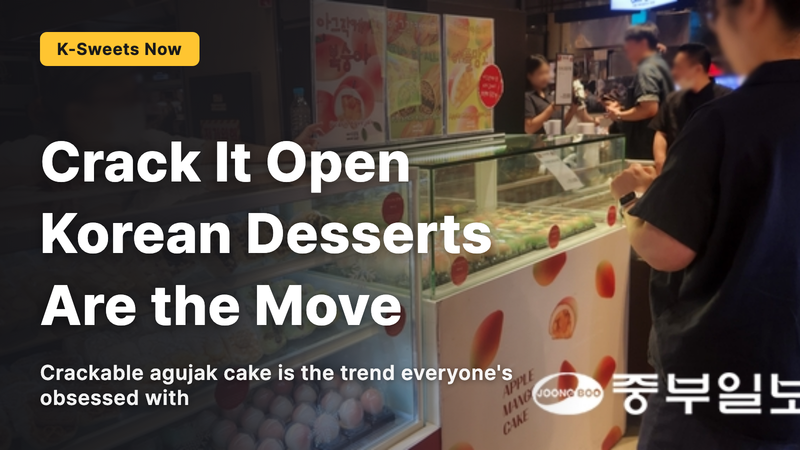
To get straight to the point, the dessert you should eat on your trip to Korea right now is the "Ageujak Cake," where you break hard chocolate to eat it. When you tap the surface with a spoon, it cracks with an "ageujak" sound, and mousse and fruit come out from inside—that whole sequence of actions is part of the product.
The price is 7,000 won to the low 10,000-won range per piece. Tous les Jours launched it in March, and it's sold exclusively at their main store and Gangnam directly-managed store. It spread rapidly through pop-ups at department stores and shopping malls, and as a new menu item at neighborhood bakery cafes.
After the Dubai-born chewy chocolate cookie craze settled down, the axis of Korean dessert trends shifted from "taste" to "texture." This is a change happening right now on the ground that hasn't made it into guidebooks yet.
Key points of this article: The Ageujak Cake costs 7,000 won to the low 10,000-won range per piece, filled with mousse plus pistachio, peach, and apple mango. Sold exclusively at the Tous les Jours main store and Gangnam directly-managed store, with pop-ups at department stores. The "Wakppu Salt Bread," a salt bread coated in chocolate, follows the same trend.
Where can you buy it? Three routes at this point
The Ageujak Cake is not yet an "available everywhere" product. Places to buy it fall into roughly three categories.
- Tous les Jours main store and Gangnam directly-managed store——The franchise bakery Tous les Jours launched it in March. It's sold exclusively at these two stores, not chain-wide.
- Pop-ups at department stores and shopping malls——Limited-time store openings. At the time of reporting, a pop-up for Tteguru-reu Bakery's Ageujak Cake was operating in the food hall on basement floor 1 of AK Plaza Suwon.
- Independently run bakery cafes——Individual shops are releasing their own versions as new menu items. This category has the largest number of shops and the widest variety of flavors.
In other words, if you want to lock in "one shop where you can definitely buy it," go to the directly-managed store; if you're hoping for a chance encounter, try a department store basement food hall. Seoul's department store basements have fast turnover, so the right move is to search for pop-up info on social media just before your trip to Korea.
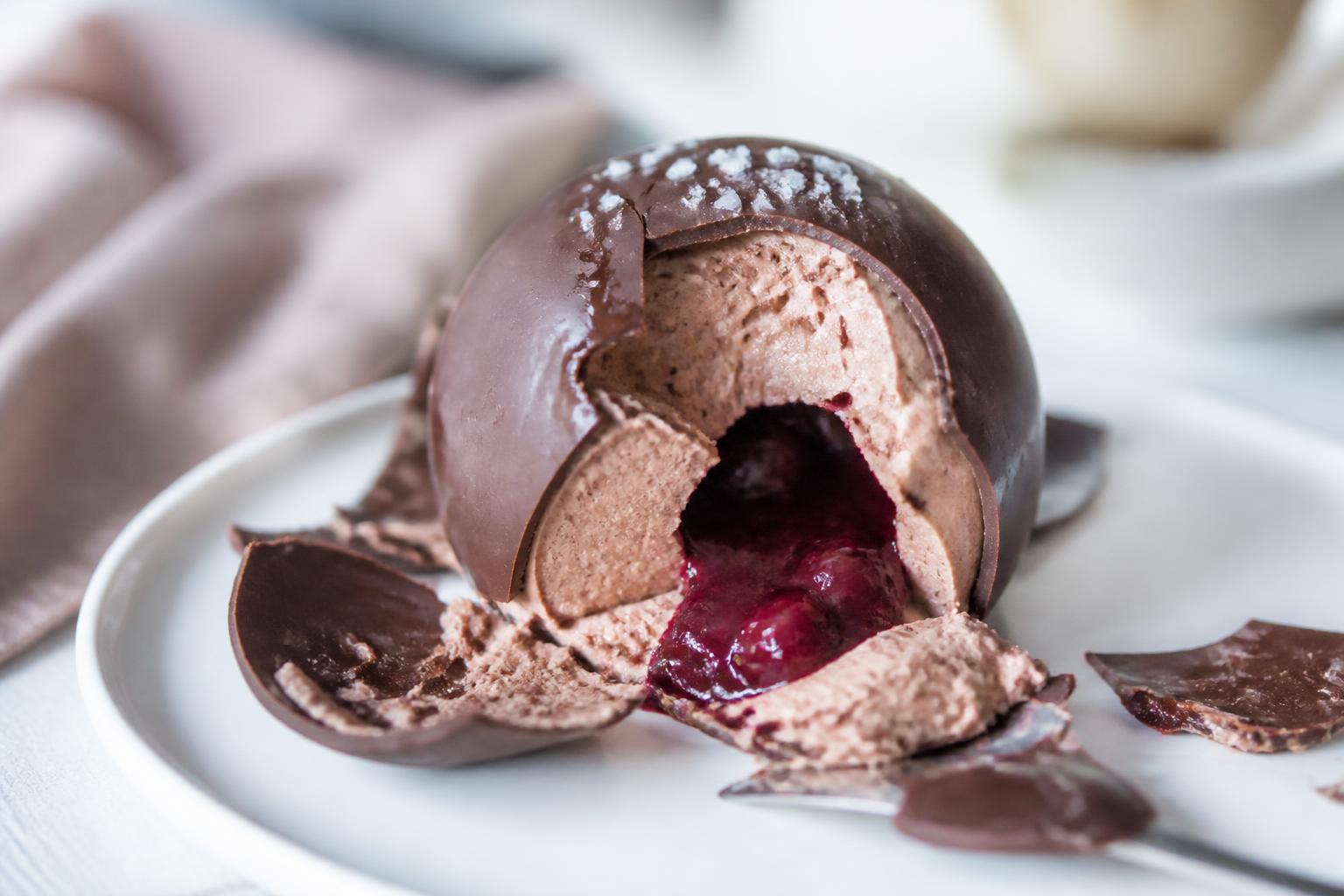
The inside is mousse. Only the surface cracks
The product design is simple. Inside a hardened chocolate coating, it's filled with soft mousse and pieces of pistachio, peach, and apple mango. The outside cracks crisply, the inside is smooth——this contrast is the selling point.
So if you're imagining a "hard sweet," you'll be off the mark. The crunch is handled by a single thin layer of coating, and once it's in your mouth, it's almost entirely a mousse cake. It's not as hard to eat as its visual impact suggests.
"I saw it trending online and went all the way to Seoul with a friend to wait in line and try it. The 'ageujak' cracking texture the moment you bite in was especially novel"——Comment from a university student (22) who visited the AK Plaza Suwon pop-up (Joongbu Ilbo)
While some people travel all the way to Seoul to wait in line, crowds also gather at pop-ups in regional areas. Because the buzz centers not on "taste reputation" but on "the experience itself," it's a structure that spreads easily regardless of a shop's prestige or location.
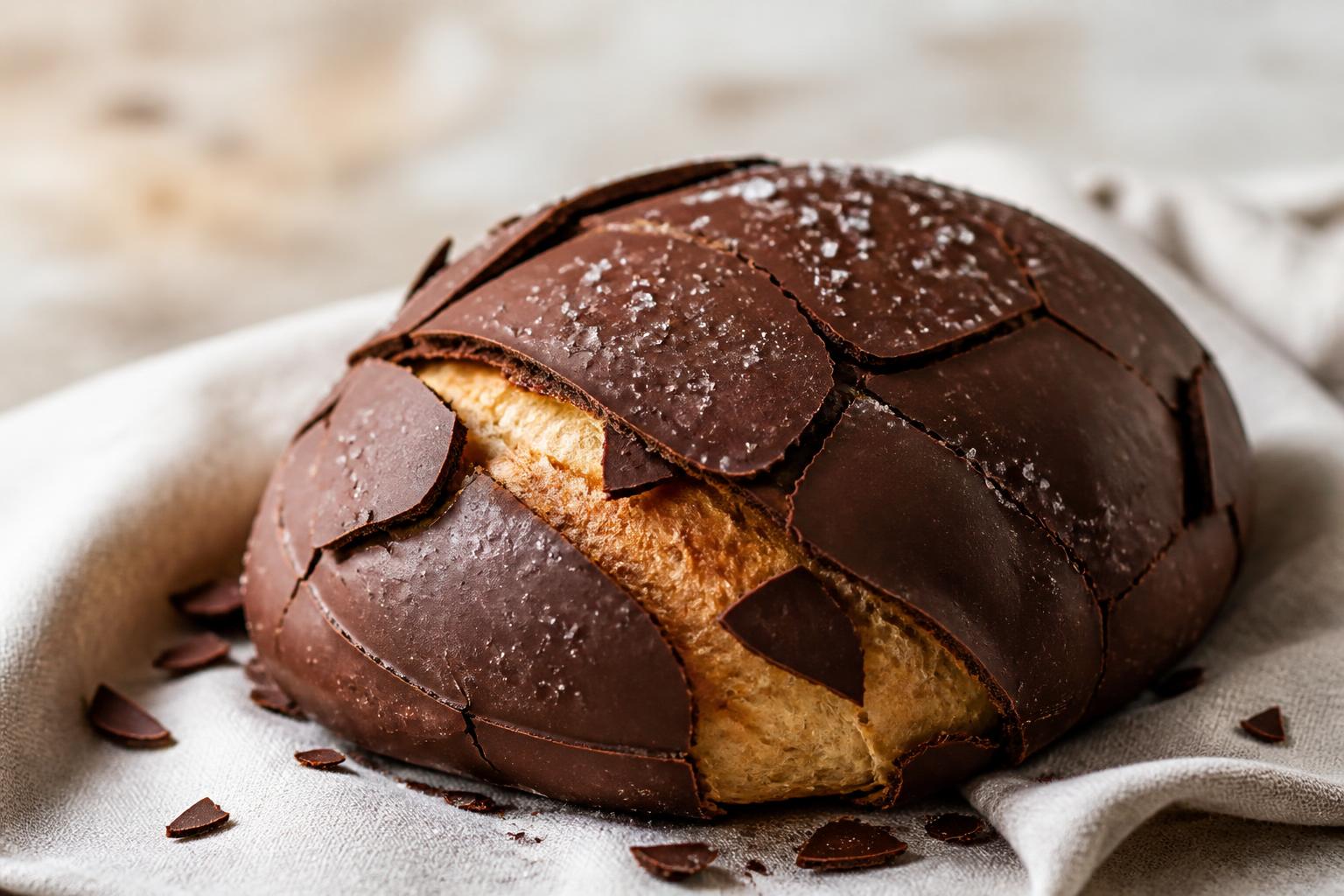
The Other Star: Wakppu Salt Bread
Born from the same "cracking" trend is Wakppu Salt Bread (wakppu sogeumppang). The name comes from "Wax Breaking Ball"—that toy where you crack open hardened wax to play.
The method is simple: coat the surface of salt bread with hardened chocolate. You crack the shell with your hands or an included tool before eating. Taking salt bread, a Korean café staple, and reframing it as a form of play is the reason for its success.
Flavor variations are quite free-form depending on the shop, with lineups including yogurt cream, fresh mango, blueberry, peach, melon, chocolate, and hwang cheese (a rich, sweet-and-salty cheese flavor). Cafés across the country, starting with Gyeonggi Province, are releasing their own versions, and some shops are now being introduced on social media as "dessert meccas."
| Item | Agujak Cake | Wakppu Salt Bread |
|---|---|---|
| Base | Mousse cake | Salt bread |
| Coating | Hard chocolate | Hardened chocolate, etc. |
| Fillings/Flavors | Pistachio, peach, apple mango pulp | Yogurt cream, fresh mango, blueberry, peach, melon, chocolate, hwang cheese |
| Price | 7,000 to low 10,000s of won each | Varies by shop |
| Where to buy | Tous les Jours main store & Gangnam flagship, department store pop-ups, bakery cafés | Bakery cafés nationwide |
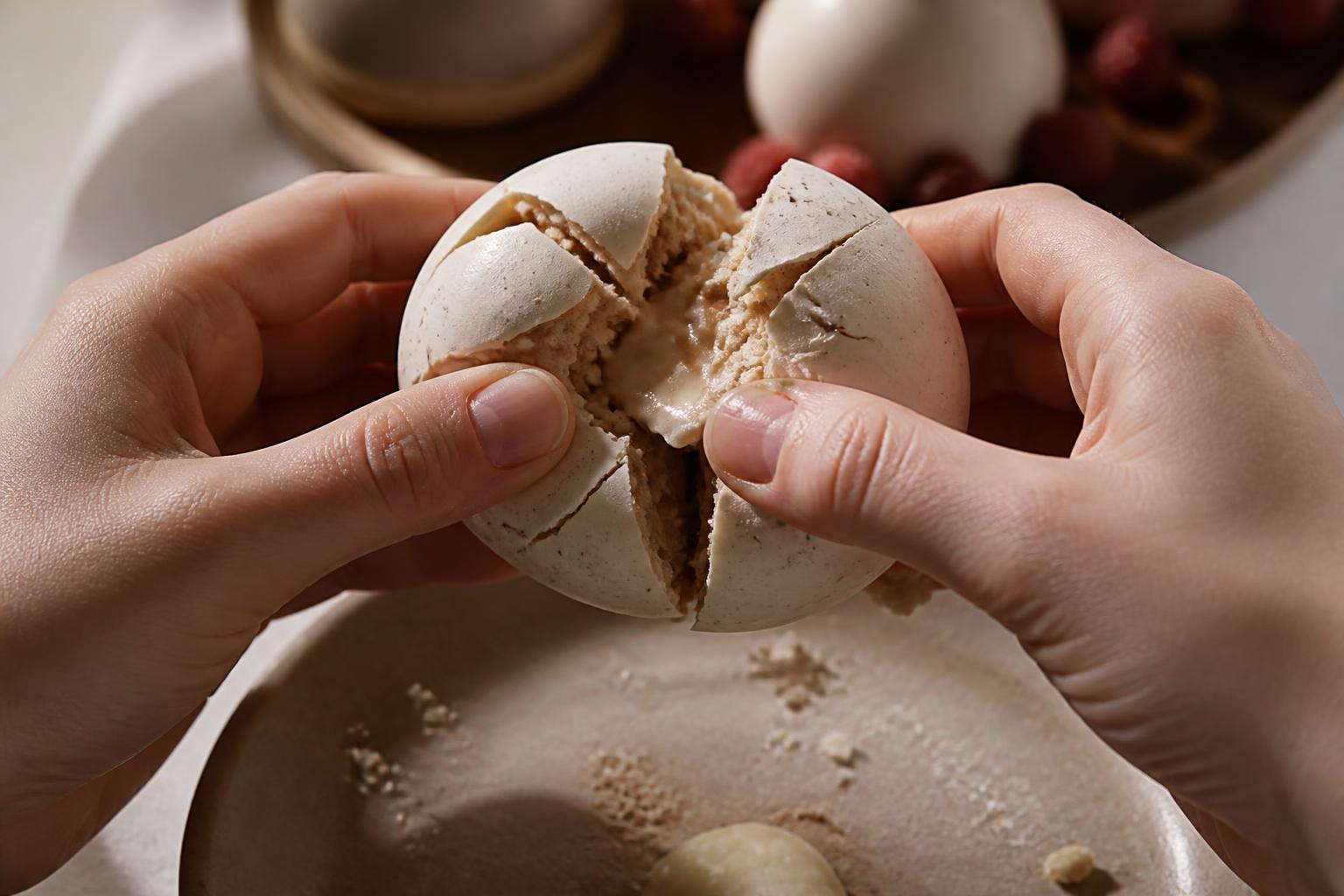
Why "Texture" Now?
The definition of dessert as something light eaten after a meal is crumbling. The industry's view is that desserts are now consumed as five-senses food—seen with the eyes, the cracking sound heard with the ears, broken apart with the hands.
Professor Lee Jung-woo of the Department of Distribution and Marketing at Namseoul University told Joongbu Ilbo that the greater the stress from economic downturns and the like, the more interest grows in foods that can relieve it. Where people once sought stimulation and fun in intense flavors like extreme spiciness, the analysis is that recently they are shifting toward finding enjoyment and stress relief in distinctive textures like chewing and cracking.
Food and restaurant businesses are also riding this wave, rolling out one product after another that puts "texture" front and center. One industry insider says that if sales are the goal, they need to continuously develop trendy desserts that appeal to younger customers, and one of the recent trends is a "crisp, crackly texture." Whether a shop can offer a new dessert experience has become a factor that determines interest and purchases (Joongboo Ilbo).
What's Blowing Up on Social Media Is the "Cracking Moment"
The biggest engine behind how far this trend has spread is close-up videos of the moment the shell cracks. Taste doesn't come through a screen, but the sound and the way it breaks do. That makes it perfect for filming and sharing, and shops are designing their products with that in mind.
If you're filming on-site, grab a well-lit seat inside the shop and take a full shot of the whole thing before you crack it. Once it's broken, the mousse inside collapses quickly, so there are no do-overs. If you want to capture the sound, aim for a time when the surroundings aren't noisy. 🍰
And before you buy, check whether takeout is allowed and whether they provide cold packs. Since the filling is mousse, it doesn't travel well in midsummer. If you're planning to film it back at your hotel, it'll have lost its shape by the time you arrive — something that applies to Korean department-store basement sweets in general.
Summary
In Korea right now, the criteria for choosing "what to eat" is shifting from taste reputation to texture experience. Agjak cake runs about 7,000 to low-10,000s won per piece, sold mainly through limited releases at TOUS les JOURS' main store and Gangnam flagship store, plus department store pop-ups. Wakpu salt bread's flavor variations are expanding at cafes nationwide.
There's only one thing to do before your trip to Korea: search social media for pop-up location info and pick just one department store basement you can actually get to. Now that the heart of the trend has moved to the experience itself, you won't know whether it's worth the line until you crack one open yourself. ✨
Frequently Asked Questions
How much does agjak cake cost?
The going rate is 7,000 won to the low 10,000s per piece. Prices and fillings vary between TOUS les JOURS' limited releases, department store pop-ups, and independent cafes' own versions, so even under the same name the contents differ from shop to shop.
Where can I buy agjak cake in Seoul?
Your safest bets are two locations: TOUS les JOURS' main store and its Gangnam flagship store. Since its March launch, it has been sold exclusively at these two stores. It's also sold at department store and shopping mall pop-ups and as a new menu item at bakery cafes, but periods and locations rotate, so search right before you go.
What's the difference between wakpu salt bread and agjak cake?
The base is different. Agjak cake is a cake with mousse and fruit filling inside, while wakpu salt bread is salt bread coated in chocolate. What they share is that you crack the hard shell with your hands or a utensil before eating.
Related Columns
- Korea Starbucks LEAF TO COFFEE: 6 items, 2 mugs not in stores
- Busan PASS: The Difference Between BIG3 and BIG5
- 8 HYBE sacred spots and how to get around Seoul
- 10 Must-Buy Items at Korean Convenience Stores, Starting from 900 Won
- When it comes to taking Korean ramyeon home, the deciding factor is the toppings
- The 3 Korean transit cards — which one is actually the right choice?