For a trip to Korea, the right amount of cash per person is 50,000–100,000 won.

Cash: 50,000–100,000 won per person. This is the current guideline for how much to prepare for a trip to Korea. While almost all payments can be completed by card, there are still places where you will definitely be stuck with zero cash.
Cards work at convenience stores, taxis, and department stores. Even so, travelers tend to stumble not on large purchases, but when topping up transportation cards, at market stalls, and at small terminals where “for some reason, foreign-issued cards don’t work.” It is not a matter of the amount, but whether your itinerary comes to a halt.
If your itinerary includes walking around Gwangjang Market (Gwangjang Sijang・광장시장) or the wholesale shops in Dongdaemun (Dongdaemun・동대문), it is safer to increase the amount to 100,000–200,000 won. Decide in advance how to break down your bills, and you will not be left wondering what to do from the first day.
Key points of this article/For 3–4 days mainly in Seoul, around 50,000 won per person; for 4–6 days of free time, 50,000–100,000 won; and for visiting markets and wholesale shops, 100,000–200,000 won. Break bills down into 10,000-, 5,000-, and 1,000-won notes. Cash top-ups for T-money are made in 1,000-won increments, ranging from 1,000 to 90,000 won.
How much should you bring? The amount depends on your itinerary
If you mainly plan to visit places in the city, department stores, chain cafés, and restaurants, 50,000–100,000 won per person will be enough. This cash is not meant to cover your travel expenses, but rather serves as a reserve fund to cover only places where card payments are unreliable.
Exchanging the entire amount as soon as you arrive is not the best strategy. Secure only the transportation, meals, and emergency funds you need for the first day, then add more along the way as needed. If you have a day that takes you through Myeongdong (Myeongdong・명동), Hongdae (Hongdae・홍대), or Dongdaemun, it is better to handle it during your free time there so you do not have to cut into your sightseeing time.
| Type of trip | Recommended cash amount | Main uses |
|---|---|---|
| 3–4 days in Seoul | Around 50,000 won per person | T-money top-ups, stalls, emergency reserve |
| 4–6 days of free time | 50,000–100,000 won per person | Transportation cards, markets, stalls, splitting small bills |
| Market food + Dongdaemun wholesale shopping | 100,000–200,000 won per person | Traditional markets, wholesale shops, cash prices at small stores |
| Traveling with children or older adults, or in a large group | At least 200,000 won for the group | Unexpected taxis, pharmacies, individual shopping, topping up transportation expenses |
The key point is not the amount, but the denominations. If you have only 50,000-won notes, they may not be accepted at markets, stalls, or top-up machines. Breaking your cash down into 10,000-, 5,000-, and 1,000-won notes is the most practical option.
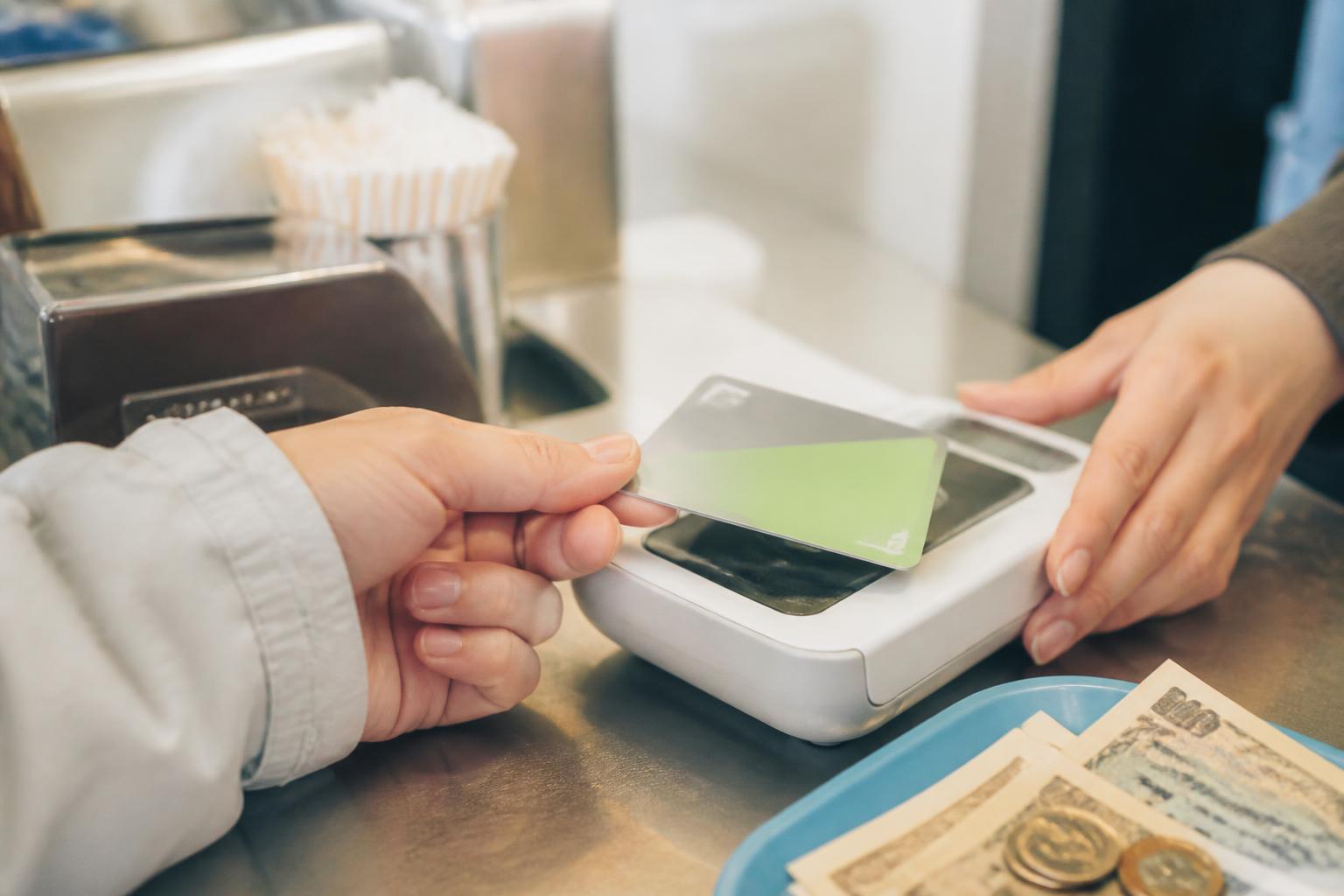
T-money top-ups are where cash is most useful
The physical T-money card is topped up with cash in won at places where it is sold and reloaded. According to the official Tmoney guide for foreigners, each top-up must be in increments of 1,000 won, ranging from 1,000 to 90,000 won. In other words, if you have 10,000-won and 1,000-won bills, you will not have to worry whether you are at a station, airport, or convenience store.
For short-term trips, the most reliable approach is to buy a card at the airport or a convenience store in the city and top it up right there using 10,000-, 5,000-, and 1,000-won bills. Starting to look up how to top up your card right in front of the ticket gates is the easiest way to lose time.
The iPhone version and travel cards follow different rules
For traveler-oriented cards such as the iPhone version of T-money, Tmoney Travel Card Plus, and WOWPASS, the rules for payment balances and transit balances are different. It is best to check before departure which card brands and apps are supported. Not assuming that “having one card solves everything” will definitely reduce stress while you are there🚇
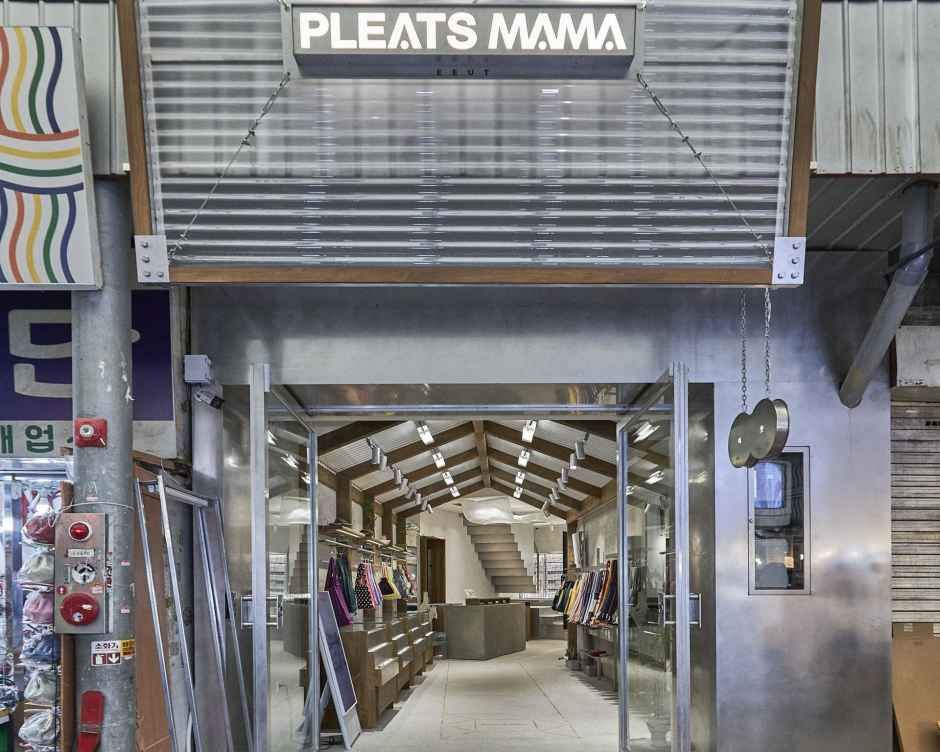
Where cards work / where cash is the only option
It is true that South Korea is relatively cashless. However, depending on the location, there are situations where cash is faster and involves fewer variables. At Gwangjang Market, stalls at Namdaemun Market (Namdaemun Market・남대문시장), street food stalls in Myeongdong, and small stalls in regional areas, some shops do accept cards, but you cannot assume that foreign-issued cards will work at every shop.
In addition, wholesale markets, underground shopping arcades, and small clothing or variety stores may offer cash prices or set minimum purchase amounts, or their payment terminals may be difficult to use. Carrying cash is not about saving money; it is insurance against your itinerary being interrupted by situations such as “this card does not work” or “this machine cannot read it.”
| Situation | Card reliability | Role of cash |
|---|---|---|
| Convenience stores, department stores, chain cafés | High | Almost unnecessary |
| Traditional markets, street food stalls | Medium to low | Snacks, small purchases, quick payment |
| Dongdaemun wholesale district, underground shopping arcades | Medium | Cash prices, split purchases |
| Tourist attractions near Seoul, small local shops | Medium | Backup when foreign-issued cards do not work |
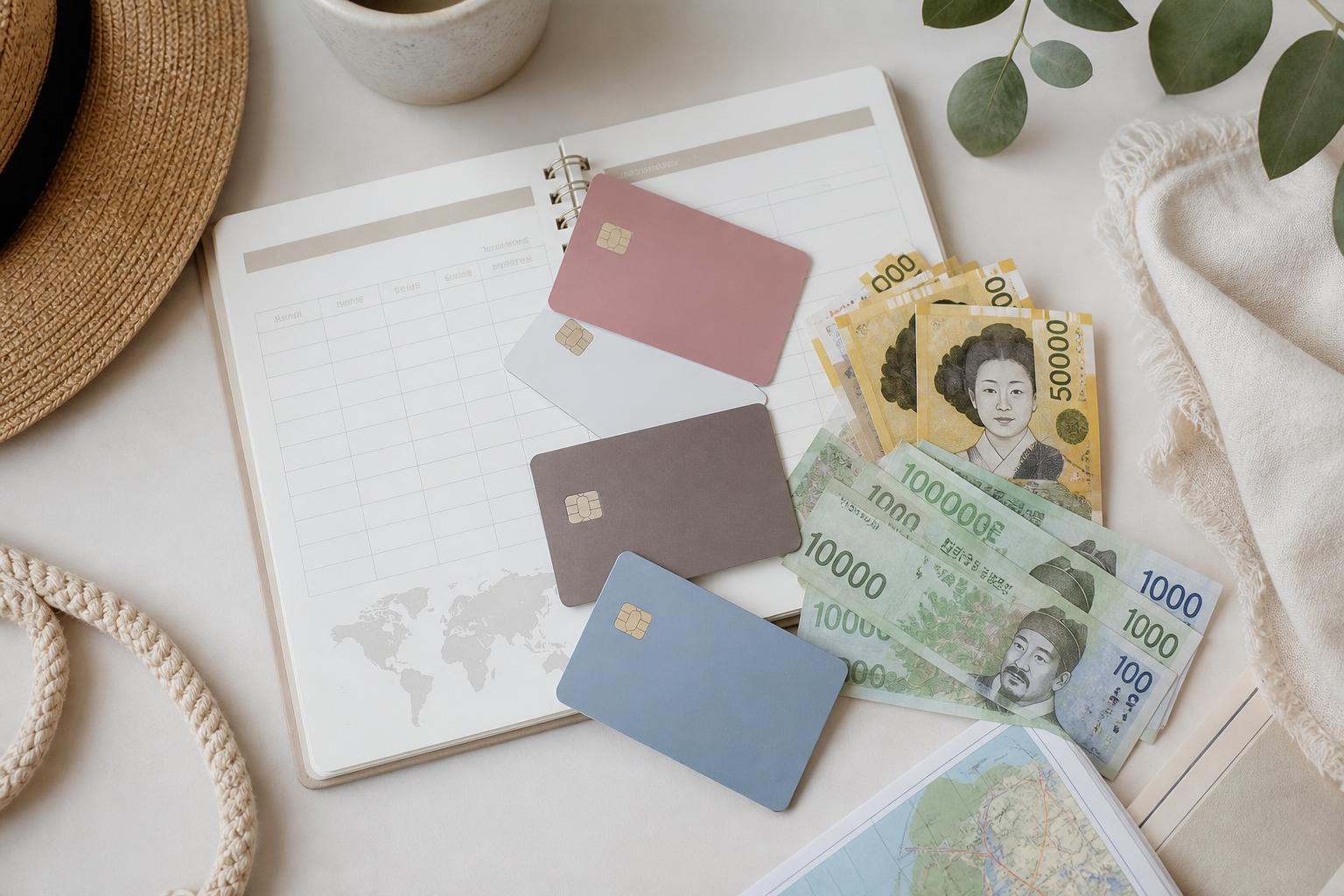
Dividing the roles of cards, WOWPASS, and cash
The least likely combination to fail is credit cards for large payments, a traveler-oriented prepaid card as a backup, and cash for small purchases and transportation. The simple rule is to use cards at hotels, department stores, and restaurants, and small bills at markets and street stalls.
- Credit cards: Have at least two cards from different banks and with different international card networks. Set things up so you are not stranded even if one card is declined
- WOWPASS / traveler-oriented prepaid card: You can load it with foreign currency and check the balance. Suitable for people who want to reduce the worry that their card may not work at small shops
- Cash in won: Do not consolidate everything into ₩50,000 bills. Use small bills at markets, for transportation, and at small shops
One thing to watch is how balances are handled. As explained in the official WOWPASS usage guide, the WOWPASS balance and the T-money transportation balance are managed separately. Even if you can make payments at stores, that does not mean your transportation balance will increase automatically. You need to top up the transportation balance separately before taking the subway or bus.
Editor's note: Two cards + one prepaid card + small bills. With this four-item set, you can resolve almost all “payment not going through” situations during your trip to Korea. Conversely, people who try to get by with just one card are more likely to get stuck at the ticket gates or in a market on the first day.
When and Where to Exchange Money
If this is your first trip to Korea, the basic approach is to secure only enough won for the first day after entering the country. An amount enough to top up your transportation card, pay for a simple meal, and cover a taxi fare in an emergency is sufficient. You can add more according to your accommodation area and itinerary, and there is no need to carry your entire travel budget with you.
If you are staying around Myeongdong, Hongdae, or Dongdaemun, you will have plenty of exchange options. If your itinerary mainly covers the suburbs, deciding in advance on a place that does not take you off your travel route will save you from spending time solely on exchanging money.
For Larger Groups and Those Traveling with Older Adults or Children, Bring a Little More
For group trips, it is best to keep more cash on hand than you would when traveling alone. When one person wants to eat at a street stall, another wants to top up a transportation card, and someone else suddenly wants to buy something, the itinerary can become fragmented if you have to look for a terminal or split the bill each time.
We recommend managing cash by separating it into “small bills for personal use” and “shared group expenses.” One person keeps the shared funds and pays for things together. On itineraries involving long travel distances, such as Namiseom (남이섬), Paju (파주), Suwon (수원), and Gangneung (강릉), this division clearly reduces the time spent settling bills✨
Summary
For payments during a trip to Korea, the best solution is neither “all card” nor “all cash,” but placing each tool where it works best. Use cards for large payments, cash for small purchases and transportation, and ₩10,000, ₩5,000, and ₩1,000 bills at markets and street stalls. As a guideline, prepare ₩50,000–₩100,000 per person, or ₩100,000–₩200,000 if you plan to explore markets and wholesale areas.
There are only two things to check before departure: whether you have at least two credit cards on hand, and the type of transportation card you will use and how to top it up. Since payment rules and card acceptance are updated, it is reassuring to check the latest conditions in the Tmoney guide for foreigners and the official WOWPASS guide.
Frequently Asked Questions
Is it okay to travel to Korea without carrying any cash at all?
We do not recommend it. Cards are widely accepted in Seoul and Busan, but you will need cash to top up a physical T-money card, pay at traditional markets and street stalls or small shops, and in case a foreign-issued card is declined. Carrying around ₩50,000 per person will give you peace of mind.
How much cash do I need for a five-day trip to Korea?
A guideline is 50,000–100,000 won per person. The main uses are topping up transportation cards, street food, shopping at markets, and emergency funds. If you plan to visit the wholesale markets in Dongdaemun, Gwangjang Market, or Namdaemun Market, or if you are splitting the bill among a large group, increase it to 100,000–200,000 won.
Can T-money be topped up with a credit card?
For short-term foreign visitors using a physical card, topping up with cash in won is the most reliable option. The official Tmoney guide for foreigners also states that cards can be topped up with cash in won at sales and top-up locations. For the mobile version and certain traveler-oriented cards, check the card type and app compatibility separately.
Related Columns
- Korea Starbucks LEAF TO COFFEE: 6 items, 2 mugs not in stores
- Busan PASS: The Difference Between BIG3 and BIG5
- 8 HYBE sacred spots and how to get around Seoul
- When it comes to taking Korean ramyeon home, the deciding factor is the toppings
- The 3 Korean transit cards — which one is actually the right choice?
- Seoul FW: The Right Way to Enjoy 7 Days for Free