Do you know about “short-hair syndrome”? The truth behind the impulse Korean women experience in fall and winter.
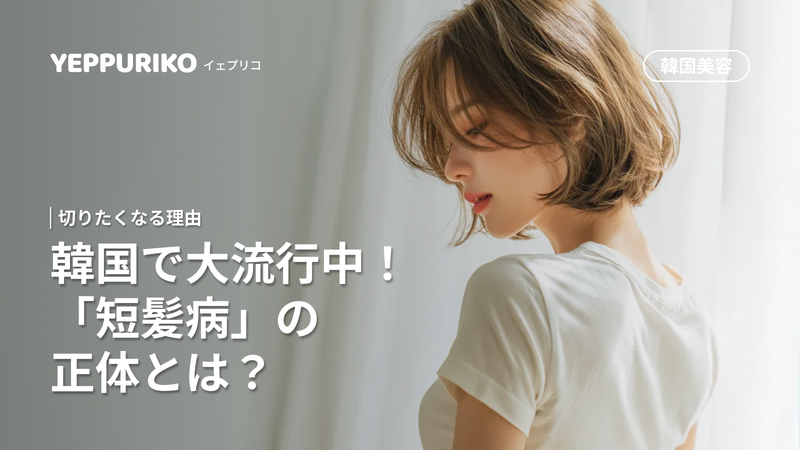
It makes me want to cut my hair again…
Have you found yourself feeling that way over and over again?✂️
It might be what is commonly called in Korea
“danbalbyeong (단발병).”
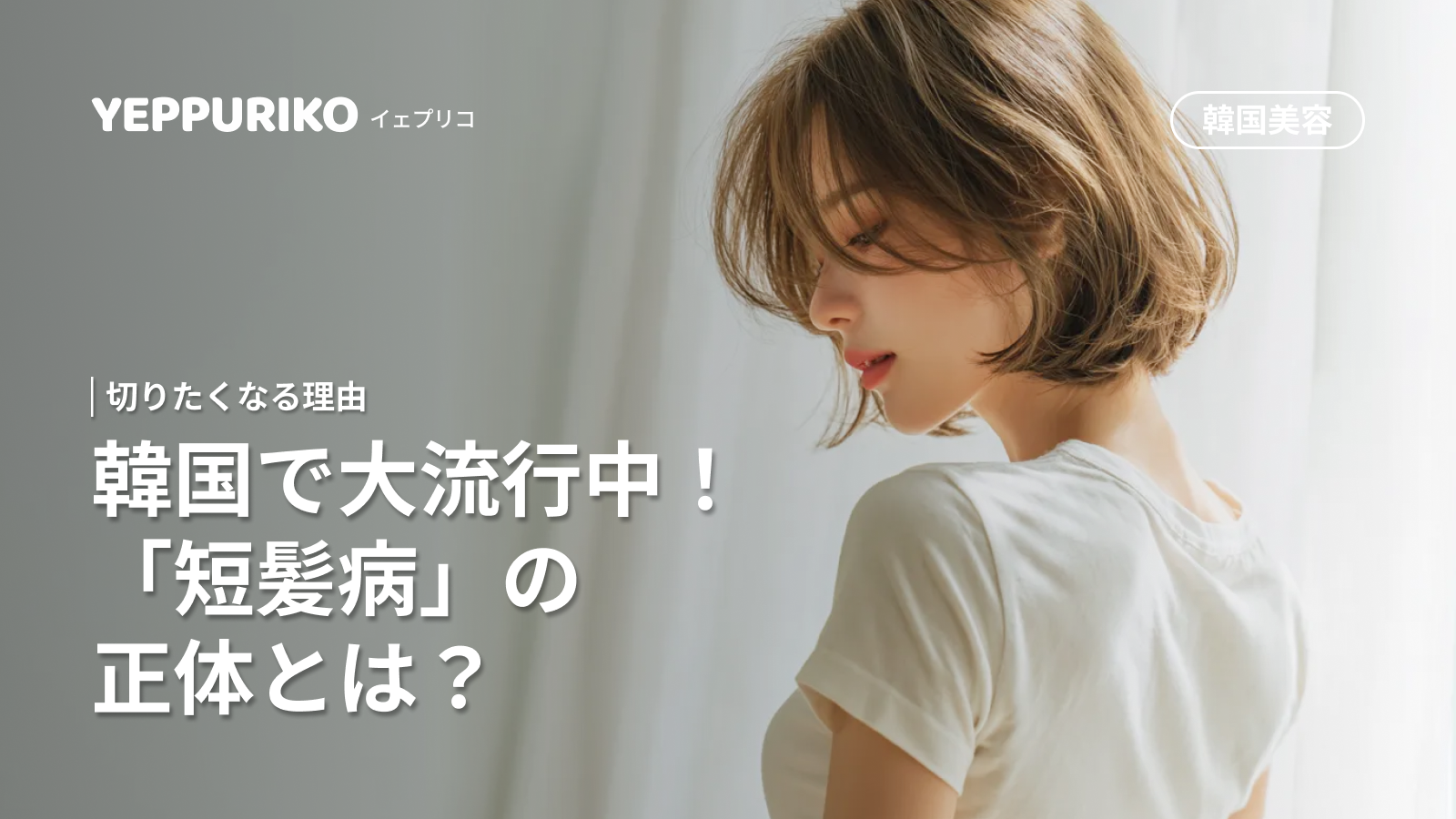
💇♀️ “I want to cut my hair again…” That impulse is actually a “condition” from Korea!
“This bob is way too cute… I want to cut my hair like that too!”
“But would it really suit me…?”
“I still want to cut it! No, wait, I might regret it…”
Have you ever experienced this kind of inner conflict?
In Korea, this is actually known as
“short-hair syndrome (danbalbyeong/단발병)”
—a “symptom” with its very own name!
From 2024 through 2025,
this term has been trending on Korean social media.
It is a uniquely amusing “phenomenon” in which
the number of people experiencing it surges in fall and winter.
This time, we’ll take an in-depth look at “danbalbyeong”〜✨
If you’re thinking, “Oh, this might be me…,”
you may already be “infected,” you know?😂
🔍 The truth about short-hair syndrome|Is it really a disease?
Short-hair syndrome (단발병/danbalbyeong) refers to
the phenomenon of seeing an appealing short or bob hairstyle
and impulsively thinking,
“I want to cut my hair too!”
It is a coined term that spread mainly among younger generations in Korea.
Because it spreads among people like a “contagious disease,”
it was given the name “〇〇-byeong (syndrome/disease).”
Of course, it is not a medical illness!
However, because it tends to
・not go away easily
・recur repeatedly
・be triggered by people around you
it is jokingly described as “kind of like a disease.”
It is a distinctively Korean humorous expression💙
What does “단발 (danbal)” mean?
In Korean, “단발 (danbal)”
means “short hair” or “bob hair.”
Strictly speaking, it refers to all hairstyles shorter than shoulder length,
so it includes a wide range of styles, from short cuts to medium-length bobs.
In English, it has a similar nuance to
“bob fever”
or
“short-hair syndrome,”
as in “I want to get a bob”✂️
📋 Do you have short-hair syndrome? Self-checklist
If you experience any of these symptoms,
you may be a full-fledged short-hair syndrome candidate!
☑️ You were captivated by an actress’s bob while watching a Korean drama
The moment you think, “I want to look like that too…” is the first sign!
☑️ You keep saving short-hair posts on Instagram
Before you know it, your saved folder is full of hairstyles.
Your symptoms are already progressing.
☑️ You repeatedly book and cancel salon appointments
“Maybe I shouldn’t… but I still want to cut it…”
☑️ You suddenly want to cut your hair when it reaches an awkward, hard-to-manage length
“This length is way too difficult to style!”
If that urge arises, be careful.
☑️ Your desire for a makeover explodes whenever the seasons change
It is especially common in fall and winter.
In Korea, it is even jokingly called “seasonal short-hair syndrome”🍂
☑️ You want to cut your hair the moment your friend gets a bob
That’s exactly what makes it “contagious.”
If someone infected is nearby, it spreads rapidly.
☑️ You tell yourself, “It’ll grow back, so it’s fine”
This is a classic thought pattern among short-hair syndrome patients😂
If three or more apply to you, you are officially a short-hair syndrome patient!
But don’t worry—you’re not alone. There are millions of “patients” in Korea💕
✨ The “virus sources” that trigger short-hair syndrome|Korean stars’ hairstyles
The biggest cause of short-hair syndrome is—
the unbelievably polished short hairstyles of Korean actresses and idols.
The moment you see their hair,
your “I want to cut mine too…!” switch turns on, and countless people catch the urge✂️
Song Hye-kyo’s elegant bob

Song Hye-kyo, the very embodiment of Korean beauty.
Her bob that falls just around the shoulder line perfectly embodies the image of a “mature woman”✨
In fact, in Korea,
there are countless women who say, “I saw Song Hye-kyo’s bob and immediately booked a salon appointment.”
✔️ Elegant
✔️ Sophisticated
✔️ The perfect balance of composure and allure
Its high level of perfection creates the illusion that
“Maybe I could pull it off too…?”
making it a top-tier virus that triggers short-hair syndrome in an instant✂️💥
It isn’t flashy, yet somehow unforgettable.
A bob that appeals to a wide range of people—from mature women and office workers to those who prefer a natural look—
it may be the representative bob with a “high danger level”😊
Kim Tae-ri’s distinctive short cut

Kim Tae-ri, who exudes an overwhelming presence in films and dramas.
Her short hair highlights her individuality without sacrificing femininity, creating an exquisite balance✨
A cool short cut without bangs gives a sophisticated impression,
while a short cut with bangs creates a softer, more approachable mood.
Every style makes you want to think, “I want to try that too,”
making her one of the leading figures known to trigger short-hair syndrome (danbalbyeong)💪
Red Velvet’s Wendy’s cute bob

Among K-pop idols, Wendy is especially known for looking amazing with short hair.
Her bright and adorable bob was one of the key catalysts that rapidly spread short-hair syndrome (danbalbyeong), particularly among younger generations.
There are even stories of Korean women flocking to salons and asking for “a bob like Wendy’s,”
showing just how influential she is🎵 Wendy is especially well known for suiting short hair.
Other stars who became famous “triggers”
・Girls’ Generation’s Taeyeon – Balances maturity and cuteness with a sophisticated short bob.
・IU – Presents an individual short hairstyle that celebrates personal style.
・Song Hye-young – Known for her natural and approachable bob style.
・Park So-dam – Presents an individual short hairstyle that celebrates personal style.
Whenever their hairstyles spread through social media and the media,
new short-hair syndrome candidates are born, thinking, “I want to cut mine too”😂
📅 When does short-hair syndrome strike?|Why does it surge in fall and winter?
In Korea, people often say that short-hair syndrome (danbalbyeong)
has a “seasonal nature.”
It is especially characterized by a sharp increase in cases from fall through winter.
So why does short-hair syndrome spread in fall and winter?
🍂 Why short-hair syndrome spreads in fall and winter
① You want a change of pace when the seasons change
From the end of summer into fall,
the desire to “change something” and “become a new version of myself” grows stronger.
When the climate changes, you naturally want to change your hairstyle too.
It’s a perfectly natural feeling🍁
② The balance of a heavy coat and lightweight hair looks great
Winter fashion tends to be heavier overall, with coats and knitwear.
Pairing it with a light, airy short cut or bob
makes the overall look appear more streamlined.
The contrast between voluminous clothing and a compact hairstyle
is very popular among Korean women✨
③ You want easier hair care during the dry season
In winter, the air becomes dry, making hair more prone to frizz and dryness.
“Daily care is such a hassle…”
“Then maybe I should cut it short and make things easier!”
This practical reason also fuels short-hair syndrome.
④ Start the new year as a new you
The new year is a time for a fresh start.
The desire to “welcome the new year with a new hairstyle”
further stimulates the urge for a makeover🎍
In fact, at Korean salons,
September through December is known as “short-hair syndrome season,”
with bob and short-hair appointments filling up.
😂 Does short-hair syndrome have a “treatment”?! Unique Korean ways to deal with it
In Korea, people even say that
short-hair syndrome (danbalbyeong) has its own “treatments.”
Of course, these are not medical treatments.
They are playful expressions born from Korean humor and shared understanding😂
Treatment ① Look at “short-hair syndrome treatment photos”

A topic of conversation on Korean social media was
“단발병 치료 사진 (danbalbyeong chiryo sajin/short-hair syndrome treatment photos).”
The idea is to look at photos of failed short cuts or moments of regret after cutting your hair
to suppress the urge to cut it.
It deliberately fuels the fear of
“What if I end up like that…?” in an attempt to help you regain your composure😂
……But the scary thing about short-hair syndrome is that even after seeing them,
you may still think, “But I’ll be fine!”
Treatment ② Try it with a wig
“Before actually cutting it, I’ll try it with a wig first!”
This is a relatively “realistic” treatment.
Korea has many high-quality bob and short-hair wigs,
so you can check in advance
✔ whether it really suits you
✔ whether you’ll get bored with it quickly✨
Treatment ③ Remove your hair extensions
If you have long hair, instead of cutting it all at once,
try removing your extensions first and going for a medium length.
Gradually going shorter
can soften the shock (?) of ending up with hair that is “shorter than expected.”
Treatment ④ Ask a trusted friend
“Do you really think it will suit me?”
Asking a trusted friend for their honest opinion can also help.
However,
the moment they say, “It will definitely suit you!”
there’s no stopping you anymore…💕
Treatment ⑤ Get a face-shape analysis
Have a professional assess whether short hair truly suits your face shape.
Many Korean salons carefully analyze
your face shape, bone structure, and overall vibe.
……That said,
if they tell you, “It suits you!”
you’ll probably end up cutting it anyway—that’s short-hair syndrome😂
🎭 Why call it a “disease”? The background behind the term short-hair syndrome
Comparing the desire to cut your hair to a “disease” is such a Korean sense of humor, isn’t it!
But this expression is actually remarkably accurate.
Why it is compared to a “disease”
① It recurs
Even after you cut your hair, once it starts growing out,
the urge to “cut it!” comes back.
Like a chronic condition, it is never truly “cured”…
② It is contagious
When your friend gets a bob, you want to cut yours too.
When you see short hair on social media, you want to try it too.
It spreads just like an “infection”!
③ It is impulsive
Suddenly, for no particular reason,
you think, “I want to cut it right now!”
That suddenness feels just like a disease “attack”😂
④ It is uncontrollable
Even when you know you might regret it, you cannot suppress the feeling.
Your emotions overpower your reason in a completely uncontrollable state…!
Korea’s “〇〇-byeong” culture
Korean has many expressions using “〇〇병 (byeong/disease).”
- 여행병 (yeohaengbyeong)
- “Travel disease”—being unable to stop wanting to travel
- 쇼핑병 (syopingbyeong)
- “Shopping disease”—an unstoppable desire to shop
- 다이어트병 (dai-eoteubyeong)
- “Diet disease”—always finding yourself focused on dieting
💡 Things to check before actually cutting your hair
“I can’t hold back anymore! I’m cutting it!”
…Before you do, check these things first✨
✅ Face-shape check
- Round faces: A bob with no bangs and longer sides works well
- Long faces: A bob with bangs and volume at the sides works well
- Square faces: A diamond-shaped silhouette with a soft texture works well
- Inverted-triangle faces: A longer bob with movement at the ends works well
Choosing a balance that suits your face shape is the key to avoiding disappointment!
✅ Lifestyle check
- Are your mornings usually busy? → A shorter style that is easy to style is ideal
- Can you take your time? → A customized bob is also fine
- Do you exercise? → Choose a length that stays manageable even when you sweat
Choosing a length that does not suit your lifestyle can cause subtle daily stress, so be careful⚠️
✅ Hair-care routine check
Short hair surprisingly requires frequent maintenance.
It is reassuring to check beforehand whether you can get a trim about once a month.
✅ Can you get through the awkward growing-out phase?
The period when you grow from short hair to medium length is the most difficult to style…!
Make sure you are mentally prepared to enjoy that phase too.
✅ Do you have a hairstylist you can trust?
Short hairstyles are especially affected by differences in technique.
In addition to reviews, check the stylist’s track record with short hair (photos) and choose someone you can trust✨
🇰🇷 “Treating” short-hair syndrome in Korea? Recommended Korean hair salon information
“If I’m going to cut it anyway, I want to do it in Korea!”
For those of you who have started feeling that way,
here is an introduction to Korean hair salons popular with short-hair syndrome patients💇♀️✨
Benefits of getting a haircut in Korea
① Highly sensitive to trends
Korean hairstylists are constantly studying the latest hairstyles worn by K-pop idols and Korean drama stars.
Another major appeal is that it is easy to communicate requests such as, “Please make it like ___.”
② Thorough face-shape and bone-structure analysis
They take time during the consultation
and offer detailed styles tailored to your face shape, features, and overall vibe.
Even if you are worried about whether it will suit you, you can feel at ease◎
③ Reasonable prices for the quality
In many cases, you can receive high-quality cuts and coloring
at more affordable prices than in Japan✨
Tips to avoid disappointment
・Choose a salon that offers Japanese-language support
・Advance reservations are essential (walk-ins are often not accepted)
・Show photos to share your desired look
・Learning the Korean words
“단발 (danbal/bob)”
and
“보브 (bobeu/bob)”
will make things go more smoothly!
While traveling in Korea,
why not try a trendy hairstyle in its country of origin?🇰🇷💕
May your “treatment (?)” for short-hair syndrome
become the perfect makeover✂️✨
🌸 Short-hair syndrome isn’t a bad thing! It’s a chance to change yourself
“I’m feeling the urge to cut my hair again… Is something wrong with me?”
No, not at all!
Short-hair syndrome
is an expression of the very positive desire to
“change” and “discover a new version of yourself.”
The reason Korean women relate to it so strongly
is that everyone experiences the same hesitation and excitement💙
These three things are important
・Don’t let yourself be swept away by the impulse; take a moment to calm down
・Gather information and prepare so you won’t regret it
・If you still want to do it, take the plunge and give it a try!
Hair grows back.
That is why a makeover is a fun challenge that you can redo even if it “doesn’t work out.”
Even the time you spend hesitating is surely part of your transformation☺️
✨ Conclusion|Has your short-hair syndrome kicked in?
The Korean coined term “short-hair syndrome (danbalbyeong)”
describes that relatable phenomenon of seeing an appealing short cut or bob
and impulsively thinking, “I want to cut my hair!”
Cases increase especially in fall and winter,
as the hairstyles of Korean actresses and idols become “sources of infection” and spread across social media…
It is truly a modern “epidemic”😂✨
But short-hair syndrome is actually an expression of the positive desire to change.
It may be discussed using humorous language, but at its core is a natural feeling that many women can relate to.
“I want to cut my hair again…”
If you recognize that feeling, you may be a full-fledged short-hair syndrome patient💕
There are various “treatments (?)” available, but what matters most is to cherish your desire while preparing carefully so you won’t regret it.
Share your desired look with photos, consult a hairstylist you trust, and once you are satisfied, take the plunge and give it a try!
While traveling in Korea, trying a trendy hairstyle in its country of origin is a wonderful idea too🇰🇷✂️
May your short-hair syndrome lead to the perfect makeover🌸
Yeppuriko brings you information to help you enjoy Korea more easily and with peace of mind.
Related Columns
- 2026 Korean Men’s Hair Trends | Explaining the Difference Between Comma Bangs × Down Perms and How to Request Them in Seoul
- 【Save-Worthy Guide】How to Book a Korean Hair Salon! Easy Booking Without a Phone Call
- Korea Starbucks LEAF TO COFFEE: 6 items, 2 mugs not in stores
- Busan PASS: The Difference Between BIG3 and BIG5
- 8 HYBE sacred spots and how to get around Seoul
- 10 Must-Buy Items at Korean Convenience Stores, Starting from 900 Won