14-Day Downtime Timeline for Plastic Surgery in Korea: When Can You Return to Work?

🎬 “When can I return to work?” Organized by procedure

This article is based on the first-hand experiences of YEPPURIKO staff who underwent plastic surgery in Korea, as well as interviews with multiple clinics. For any final medical decisions, be sure to consult your attending physician.
🎯 The Biggest Concern During Downtime After Plastic Surgery in Korea: “When Can I Return to Work?”
I want to become more beautiful while visiting Korea.
Even so, the most concerning issue is the practical question of when you can return to work after going back home.
Especially for customer service or office work, the progress of swelling and bruising directly affects your daily life.
From here, we will organize the realistic recovery process from D-Day to D+14 by procedure type.
💉 Can you return to work the day after skin treatments and injections?

Skin treatments and injections such as Rejuran, Potenza, and Botox are short-term procedures.
They are popular options for those who want to minimize the impact on their work.
On D-Day, redness and small raised bumps (embossing) may appear, but they subside within a few hours for many people.
By the next day, D+1, they can be almost completely concealed with makeup, and although the skin may feel slightly rough, in most cases it is entirely possible to go to work.
By D+3, most of the redness has disappeared, and you enter the “golden time,” when your skin begins to develop a radiant glow.
✅ Estimated Return to Work
Many people feel that returning to work the next day to two days later is no problem, making this a procedure that can easily be incorporated into a one-night, two-day weekend trip. Since recovery speed varies from person to person, be sure to check with your doctor before the procedure.
😌 Three Days Off Is Recommended for Under-Eye, Masseter Botox, and Contour Injections

These are areas where slight swelling and bruising are likely to occur.
From D+1 to D+2, swelling may appear similar to after crying.
D+3 is when swelling peaks, and if bruising occurs, it is when it begins to turn yellowish.
By D+7, most of the swelling will have subsided, returning to a natural appearance (individual conditions may vary).
✅ Estimated Return to Work
As a precaution, taking about three days off or working remotely is recommended. For those with many face-to-face responsibilities, combining this with paid leave is a reassuring option.
🏥 Rhinoplasty, Liposuction, and Bone-Contouring Surgery: Two Weeks as a Guideline for Returning to Normal Life
These procedures fall into the category known as “major surgery.”
During the peak period from D+1 to D+3, your face may swell to the point of being described as “looking like a potato.”
With rhinoplasty, your nose will have a cast and packing in it, making this a somewhat difficult period because you will need to breathe through your mouth.
On D+7, the day your stitches are removed, you will revisit the clinic in Korea to have the cast and sutures removed. From this day onward, many people reach a level where they can go out “as long as they wear a mask.”
By D+10, the major swelling subsides, and the contours of your entire face begin to show.
Then, by D+14, the swelling settles to the point where, even without a mask, you may only look “slightly puffy.” Many people return to work around D+14, but recovery speed varies from person to person. We recommend confirming your final schedule in advance with your doctor.
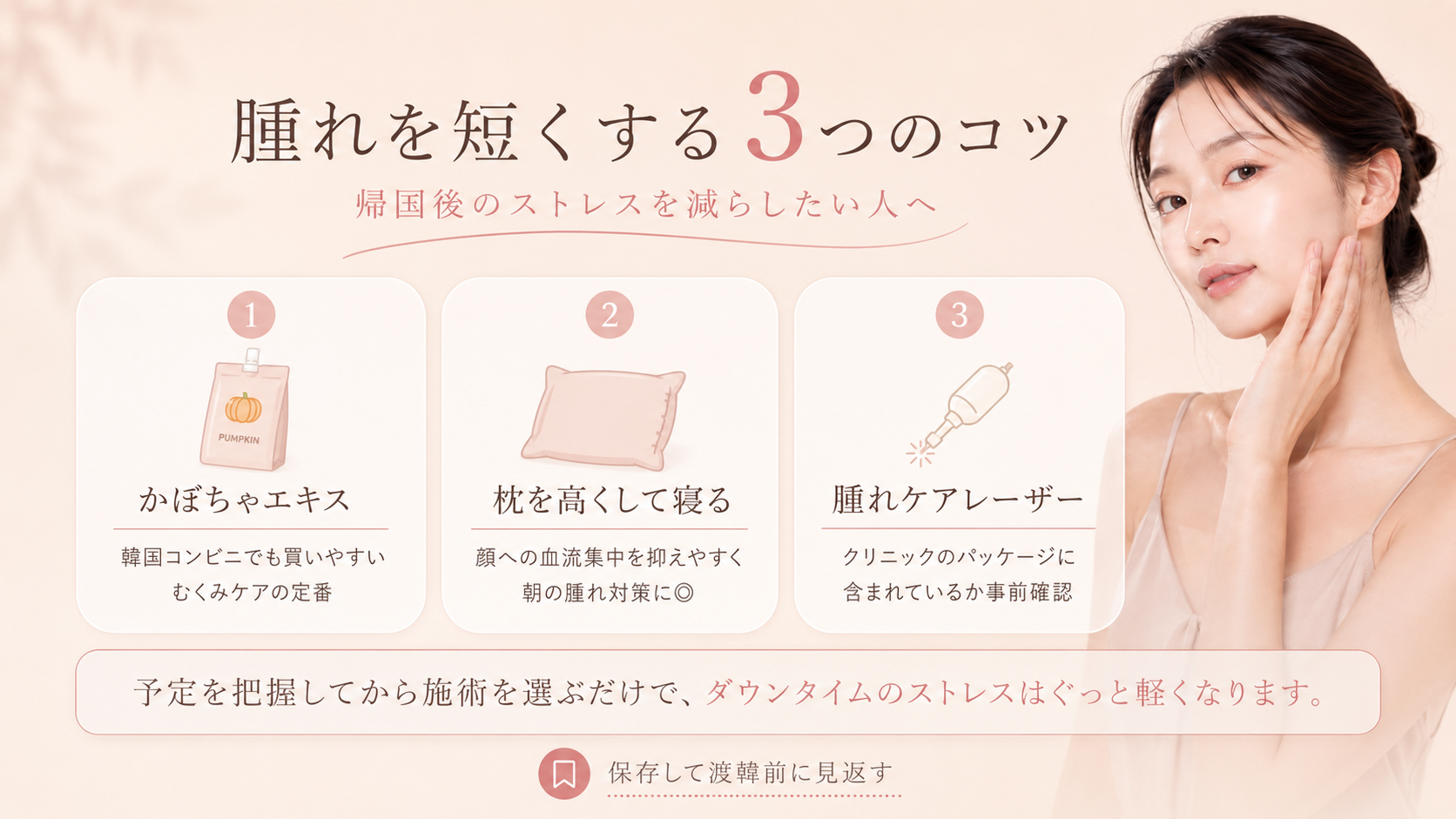
⚡ 3 Tips for Shortening Downtime After Traveling to Korea for Cosmetic Surgery
Recovery speed varies from person to person, but there are measures you can take starting during your stay.
✅ Using Pumpkin Extract
“Pumpkin juice” sold at convenience stores and pharmacies in Korea is known as a staple for reducing swelling. Many people incorporate it into their routine while staying in Korea.
✅ Sleep with Your Head Elevated
Some people feel that sleeping with their head positioned higher than their heart helps reduce the concentration of blood flow to the face and lessen swelling the next morning.
✅ LED Light Therapy・Swelling-Care Laser
Recently, more clinics have begun including “swelling-care laser treatments” in their surgical fees. Be sure to check in advance whether they are included in the package.
📅 Things to Confirm During Your Pre-Consultation
Confirming these details with the clinic before traveling to Korea will make it easier to plan your schedule during your stay.
✅ Timing of Suture Removal (Suture Removal/Thread Removal)
For nose and eye surgeries, it is generally necessary to have the sutures removed 5–7 days afterward. If your stay is not long enough, check in advance whether suture removal is available at an affiliated clinic in Japan.
✅ Aftercare Details
Whether swelling care lasers, LED treatments, and similar services are included in the surgery package can affect the speed of recovery. A final decision requires a consultation with a doctor.
❓ Frequently Asked Questions
Q. How long is the downtime for undergoing cosmetic procedures in Korea?
It varies depending on the procedure. Skin treatments and injectables typically require 1–2 days, eye procedures and facial contour injections around 3 days, and major surgeries such as rhinoplasty, liposuction, and bone contouring around 14 days. Recovery times vary from person to person.
Q. How many days should I take off work?
For skin treatments and injectables, taking no time off to 1 day off is generally sufficient; 3 days are recommended for eye procedures and Botox, and about 2 weeks for major surgery. Those working in customer service are advised to allow for a more flexible schedule.
Q. Can I have my stitches removed in Japan?
In some cases, this may be possible at an affiliated clinic in Japan. Before surgery, check with the Korean clinic whether they have an affiliated clinic or can provide a referral letter.
Q. Can I go sightseeing during the downtime period after plastic surgery in Korea?
In the case of skin treatments and injectables, light sightseeing may be possible from the next day. For major surgery, resting at the hotel until the stitches are removed is generally recommended.
✨ Summary
□ In many cases, you can return to your normal routine the next day to two days later after skin treatments and injectables
□ For procedures around the eyes, masseter Botox, and contour injections, taking 3 days off or working remotely is recommended
□ For nose surgery, liposuction, and bone-cutting procedures, D+14 is a guideline for returning to society
□ Planning for one week in Korea plus one week of recuperation at home is realistic
□ Keep in mind these three things: pumpkin extract, an elevated pillow, and swelling-care laser treatments
□ Confirm the timing of stitch removal and the aftercare details during your consultation in advance
📚 Related articles you may also enjoy
→ YEPPURIKO also provides information on choosing a clinic and typical costs for plastic surgery in Korea.
→ We explain in detail in a separate article the effects and types of skin treatments such as Rejuran and Potenza.
→ Please also check the preparation checklist for plastic surgery in Korea (what to bring, reservations, and interpretation) before your stay.
Related Columns
- Korea Starbucks LEAF TO COFFEE: 6 items, 2 mugs not in stores
- Busan PASS: The Difference Between BIG3 and BIG5
- 8 HYBE sacred spots and how to get around Seoul
- 10 Must-Buy Items at Korean Convenience Stores, Starting from 900 Won
- When it comes to taking Korean ramyeon home, the deciding factor is the toppings
- The 3 Korean transit cards — which one is actually the right choice?